More
    Home Blog Page 2

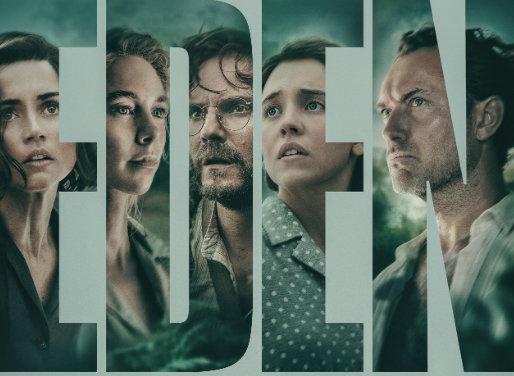
    Eden (2024)

    Separate groups of people leave the world behind, settle on a remote island, but turn against each other.

    Brutality with a purpose. Eden is not interested in comforting its audience, but in projecting humanity’s oldest fantasy – starting over – and its most consistent failure: destroying every so-called paradise we touch. Co-writer/director Ron Howard strips survival down to its rawest question: when everything is taken away, what remains of our morals – if they were ever truly there to begin with?

    Set against the aftermath of world-scale death and collapse (WWI), Eden follows people who flee civilisation not to build something better, but to escape what they have seen humanity become. An island promises rebirth. Clean air. Clean conscience. Yet the film never pretends that geography can cleanse psychology. Hunger, fear, vanity, and ideological rigidity creep in quietly, then take over completely. Will corruption return, or has it actually never left?

    The script is tight, the characters clearly defined, and the pacing deliberate without ever feeling indulgent. Every moral position feels provisional, every belief fragile. Nihilistic philosophies collide with hollow hope, and ideals that once sounded noble collapse the moment survival demands compromise. Do principles survive starvation? Does community exist without advantage? Is cruelty a failure of humanity – or its most honest expression?

    Cinematically, Eden never overreaches. Performances are grounded, stripped of theatricality, allowing the brutality to feel lived-in rather than staged. Jude Law, Ana de Armas, Vanessa Kirby, Daniel Brühl, Sydney Sweeney, and the rest of the cast are excellent choices. Twists arrive not as shock tactics, but as inevitable consequences of earlier choices. The suspense doesn’t come from what will happen, but from who will break first – and how far they’ll fall once they do. The soundtrack subtly accompanies the dark emotions and feelings, which are more often than not projected onto the weather (pathetic fallacy). The ending pulls the audience forward not through spectacle, but through dread rooted in recognition.

    And yet, despite its superb cast, everyone’s efforts, and that it’s based on an actual, intriguing, fascinating, and breathtaking story, Eden largely disappeared upon release – financially and critically – not because it failed, but because it demanded attention rather than offering escapism. It asks viewers to pay for discomfort, for a disturbance that feels uncomfortably familiar rather than sensationally new. In an industry addicted to immediacy and noise, subtle existential horror is easy to overlook.

    Eden may not offer hope, but it offers clarity, which can be far more unsettling.

    Thanks for reading!

    Please, don’t forget to share. If you enjoy my work and dedication to film, please feel free to support me on https://www.patreon.com/kaygazpro. Any contribution is much appreciated and valued.

    Solidarity for all the innocent lives that suffer the atrocities of war!

    Stay safe!
    Clint Eastwood

    0

    “I tend to put down the auteur theory because a lot of people embraced it as a one-man/one-concept kind of thing, and making a movie is an ensemble.”

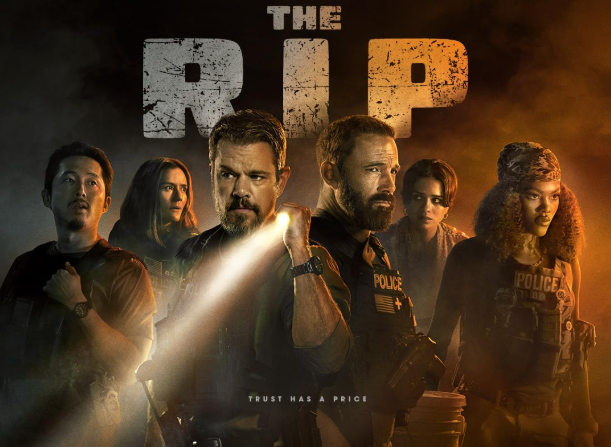
    The Rip (2026)

    When a group of cops receives a big tip about stashed money, loyalties shift, and everyone turns on one another.

    Easily digestible, action-packed thriller. Writer/director Joe Carnahan does what he knows best. From Narc (2002) to Smokin’ Aces (2006) to Boss Level (2020), Copshop (2021), Carnahan has always thrived in controlled chaos, and here he delivers an action/thriller that understands momentum, suspicion, and the pleasure of watching trust erode in real time.

    In a team that has known each other for years, familiarity turns into doubt and loyalty into leverage. No one is clean, no one is safe, and no one seems to be telling the whole truth. Whose money is it? Where did the tip come from? Who is making a move, and who is reacting too late? The film piles questions on top of one another, constantly shifting alliances and motivations, keeping the viewer guessing just long enough before pulling the rug again. The double-crosses, the last-minute reveals, the moral compromises – they’re all familiar, but they’re delivered with confidence and pacing that make them work.

    Matt Damon and Ben Affleck reuniting on screen carries its own weight, and they prove – nearly four decades after their early beginnings – that their chemistry is still intact. Also, great performances by Steven Yeun, Teyana Taylor, Catalina Sandino Moreno, Sasha Calle, Scott Adkins, and Kyle Chandler.

    Nothing in Netflix’s The Rip is revolutionary. There’s no single scene that demands to be analysed to death, no thematic statement screaming for attention. Instead, the film offers something arguably rarer: competence. The build-up works, the action lands, the plot holds together, and the tension rarely drops, regardless of certain cliches.

    It’s an easy watch in the best sense – ideal for a night in with your partner or your mates, where the twists spark conversation rather than confusion. The closing tribute to real-life Miami Police Department Captain Chris Casiano, whose investigation inspired the film and who lost his son to leukaemia in 2021, adds a quiet note of gravity that grounds the spectacle in something real.

    Sometimes, delivering exactly what you promise is more than enough – and The Rip delivers.

    Thanks for reading!

    Please, don’t forget to share. If you enjoy my work and dedication to film, please feel free to support me on https://www.patreon.com/kaygazpro. Any contribution is much appreciated and valued.

    Solidarity for all the innocent lives that suffer the atrocities of war!

    Stay safe!
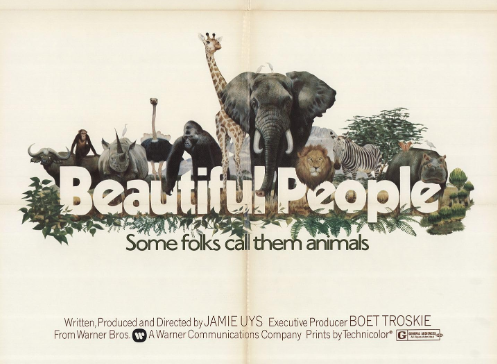
    Animals Are Beautiful People (1974)

    0

    It took 3.5 years and 152 kilometres of film to complete this wonderful 90-minute documentary.

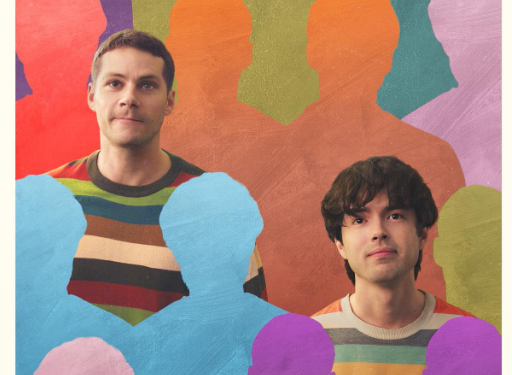
    Twineless (2025)

    0

    Two grieving strangers form an unexpected bond that forces them to confront loss and loneliness, and to ultimately move forward.

    One of those films that quietly earns its place in my end-of-the-year reviews. Bittersweet without being heavy, tender without becoming sentimental, it carries what could be called a kind of lying honesty: emotions that arrive gently, but stay with you long after the credits roll. Writer/director/actor James Sweeney delivers a film that confidently joins the landscape of contemporary queer cinema while remaining refreshingly unburdened by didacticism.

    Twineless is about grief, loneliness, and the slow, awkward process of self-acceptance. What makes it resonate is not the novelty of its themes, but the ease with which it allows them to breathe. The film never presses its emotional weight onto the viewer’s chest; instead, it lets moments unfold naturally, trusting silence, humour, and restraint as much as dialogue. There is warmth here, but also discomfort – the kind that feels recognisably human.

    The performances are its major strength. Dylan O’Brien (Roman/Rocky) and James Sweeney (Dennis) share an easy, believable chemistry, grounding the film in vulnerability rather than performance bravado. Aisling Franciosi (Marcie) adds the right amount of naivety that, in the end, steps up, while Lauren Graham (Lisa) makes every shot she’s in more beautiful than it already is. Together, they give flesh and blood to characters who grieve, isolate themselves, resent, and occasionally self-sabotage – yet keep searching for a way to love themselves honestly. Not perfectly, but truthfully.

    What Twineless avoids, perhaps most admirably, is agenda. It does not posture politically or moralise identity or sexual orientation. Instead, it suggests something far simpler and far more radical: that all genders are equally flawed because all humans are flawed. Everyone makes poor choices, everyone longs for connection, and everyone needs to be seen – not corrected, not packaged, just understood.

    Suspense is sustained not through spectacle, but through information – who knows what, why, and how and when it will be revealed. The balance between audience awareness and character knowledge shifts with precision, creating tension rooted in empathy rather than shock. The film understands exactly when viewers want something revealed and when the characters themselves are ready to face it.

    In resisting both cruelty and simplification, Twineless stands as a strong addition to American independent cinema – humane, sincere, and disarmingly honest. Not loud, not showy, but deeply felt.

    Thanks for reading!

    Please, don’t forget to share. If you enjoy my work and dedication to film, please feel free to support me on https://www.patreon.com/kaygazpro. Any contribution is much appreciated and valued.

    Solidarity for all the innocent lives that suffer the atrocities of war!

    Stay safe!
    Miranda July

    0

    “I write down the idea in my notebook, and then I put a little letter in the corner. S for the story, N for novel, M for movie, A for art, P for performance, B for business. This makes me sound totally rigid. I am also lots of fun! Totally wild! Party!”

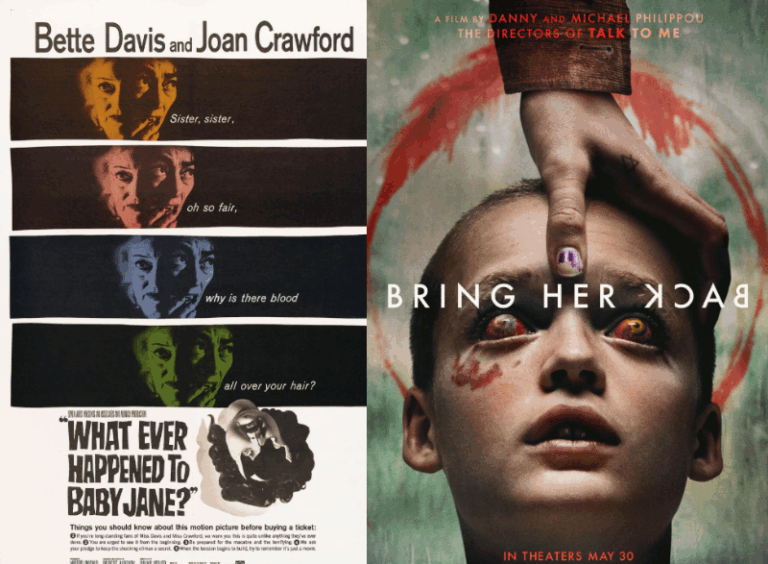
    Psycho-biddy Horror: Monsters, Glamour, and Survival

    0

    From Psycho to Misery, psycho-biddy horror turned Hollywood’s grande dames into figures of fear — giving them powerful roles, but also playing into ageism and misogyny. Was it empowerment, exploitation… or both?

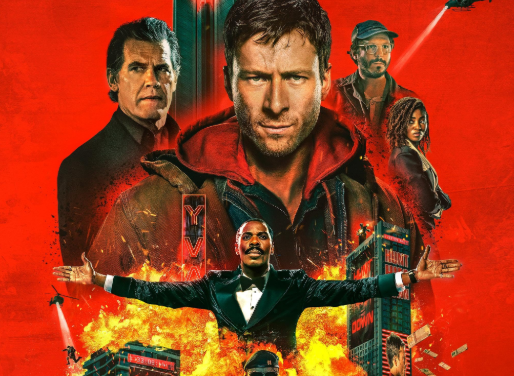
    The Running Man (2025)

    A paradoxical spectacle that ultimately lets down. The Running Man looks ferocious, sounds electrifying, and moves at breakneck speed, yet hesitates to fully embrace the philosophical darkness that made Stephen King’s original novel – and even the 1987 adaptation – so unsettlingly prophetic.

    King’s The Running Man remains diachronically relevant because it diagnosed something far deeper than flashy violence: a society willingly numbed, morally eroded, and pacified by spectacle. In the early 1980s, when reality television was still tame, and Orwell’s 1984 felt abstract rather than imminent, King foresaw a culture drifting toward intellectual atrophy and ethical collapse. The original film translated that into a dystopia where justice had evaporated, the state was hollow, and mega-corporations governed through ratings, brutality, and mass distraction. That future, disturbingly, no longer feels like science fiction.

    Edgar Wright’s version pushes the setting further into cyberpunk territory – high technology, glossy excess, and non-existent morals – but it does so at a time when reality itself has arguably outpaced satire. Our own entertainment ecosystem has become louder, crueler, and more vapid; audiences more desensitised, more complicit. In that sense, Wright’s The Running Man is less shocking than reflective. It no longer warns us of what might come – it depicts, to a lesser extent, what already is.

    Where the film falters is not in craft but in conviction. The two-hour-plus runtime delivers relentless, impeccably choreographed action, kinetic editing, and Wright’s trademark audiovisual bravura. Yet the dystopia often feels like a backdrop rather than a driving force. Ben Richard’s (Glen Powell) motivation – fighting for his family – registers as obligatory rather than existential, and the ideological purpose of the games is barely interrogated. Alongside Powell, Lee Pace, Michael Cera, Josh Brolin and the rest of the cast are solid choices, but they are all overshadowed by the narrative. Most damaging is the familiar Hollywood shortcut of the fickle crowd: the masses switching allegiance overnight, as seen in a painful manner recently in Superman (2025) and The Fantastic Four (2025). This narrative laziness misunderstands both crowd psychology and audience intelligence, reducing complex social behaviour to a convenient plot lever.

    Ultimately, The Running Man excels on a sensory level but softens King’s brutal thesis about the collapse of human dignity. The darkness is present, but it is overwhelmed by spectacle – yet another example that Hollywood still struggles to stare directly into the abyss it so profitably exploits.

    Thanks for reading!

    Please, don’t forget to share. If you enjoy my work and dedication to film, please feel free to support me on https://www.patreon.com/kaygazpro. Any contribution is much appreciated and valued.

    Solidarity for all the innocent lives that suffer the atrocities of war!

    Stay safe!
    The Curious Case of Benjamin Button (2008)

    0

    Several elements – like hummingbirds flying backward (the only bird in the world that can), cyclones spinning clockwise in the Northern Hemisphere and counterclockwise in the Southern, and reversed clocks – are among the reversed motifs that accompany Benjamin Button’s backward life.

    Kapodistrias (2025)

    As Ioannis Kapodistrias strives to unite a newly liberated Greece and rebuild its identity, his moral resolve is tested by rivalry, betrayal, and the heavy cost of leadership.

    A divisive story about unity. There are films that divide audiences, and then there are films that expose the divisions that already exist. Yannis Smaragdis’ Kapodistrias manages both. It became a superb example of unity and fracture at once – not only thematically, but socially. Critics overwhelmingly attacked it; audiences overwhelmingly embraced it. The harsher the reviews became, the longer the queues for the cinema grew, and they still grow. This fascinating oxymoron alone is reason to look closer.

    Visually, the film is often striking. Aris Stavrou’s cinematography frames Greece as both mythic and intimate: sweeping landscapes, aristocratic interiors, and modest living quarters coexist in painterly light. The deliberate, sometimes questionable, alternation between static and handheld camera is not random; at times it captures the stillness of political ceremony, at others the instability of a nation being born. Not every choice is equally motivated, but the intention is palpable – to place the viewer in both history and immediacy.

    The performances range from decent to genuinely compelling. With such a vast cast portraying figures whose emotional registers we cannot fully confirm – how did people of that era joke? Break down? Rage? – The challenge is immense. Actors here are not reconstructing personalities via footage, but attempting to re-inhabit emotional worlds accessible only through written testimony. That they achieve credible humanity at all is an accomplishment.

    Editing – though curiously uncredited on IMDb – largely succeeds in sustaining momentum, tension, and inevitability. We know where the story leads; the assassination is a historical fact. Yet the film still compels us to hope against what we know. That dramatic irony is a core strength. However, some transitions feel rushed – most notably the abrupt unification of the captains under Kapodistrias (Antonis Myriagos). Scenes that should feel earned instead feel narrated, their emotional impact flattened. The moment Mando Mavrogenous (Mary Vidali) learns what Kapodistrias did for her is the polar opposite, as the scene is inundated with emotion.

    Smaragdis’ script consciously chooses emphasis over totality. It foregrounds Kapodistrias’ triumphs – unifying Switzerland, aiding France, strengthening Russia, and liberating Greece – while marginalising other dimensions. That selectivity, grounded in the director’s and his historical team’s perspective, is exactly what potentially enraged many reviewers. Yet cinema is always interpretation; what is challenged here is not accuracy alone but the politics of perspective.

    And this leads to the heart of the matter. The film positions Kapodistrias as the figure who sought to reunite Greece with its lost identity, to transition from four centuries under Ottoman rule into freedom and prosperity grounded in shared contribution. For many viewers, this still resonates painfully today. Those with much refused then – and refuse now – to relinquish privilege and give anything. Those with little gave – and still give – everything. The film wounds precisely because the wound remains open. Greece continues to navigate between external European demands and an internal identity long weakened but not restored.

    The audience recognised themselves. The critics recognised a political provocation. As a researcher, I ask: why? Why is it that a cinematic achievement, however flawed, is trashed by people who are eager to sell words? Is this yet another example of the division Kapodistrias tried to heal? Are we still fighting the one or many who try to give just to the country? Have we still not learned?

    The off-screen story only deepens this reading. Smaragdis publicly spoke of funding cuts, institutional obstruction, grief over losing his wife and producer Eleni, and the need for diaspora support to keep the project alive. Supporters framed the film as a national rather than private undertaking, while the director accused cultural “circles” of fearing the film’s message. Whether or not one accepts these claims in full, they reveal the emotional and political battleground surrounding the film – a battleground that mirrors its narrative of divided power, wounded vision, and contested leadership.

    Kapodistrias is not without flaws – sometimes rushed, sometimes rhetorically heavy. But it is also cinematically ambitious, emotionally resonant, historically provocative, and a rare big-screen achievement for the country. It dares to argue that leadership rooted in ethical vision is not simply part of the past but urgently needed in the present. It asks whether Greece, after two hundred years, has yet learned how to be whole.

    And perhaps that is why audiences embraced it: not because it is perfect cinema, but because it is painfully relevant cinema.

    Thanks for reading!

    Please, don’t forget to share. If you enjoy my work and dedication to film, please feel free to support me on https://www.patreon.com/kaygazpro. Any contribution is much appreciated and valued.

    Solidarity for all the innocent lives that suffer the atrocities of war!

    Stay safe!

    Francis Ford Coppola

    0

    “I have always credited the writer of the original material above the title: Mario Puzo’s The Godfather, Bram Stoker’s Dracula, or John Grisham’s The Rainmaker. I felt that I didn’t have the right to Francis Coppola’s anything unless I had written the story and the screenplay.”

    If I Had Legs I’d Kick You (2025)

    0

    A woman, struggling to care for others while barely holding herself together, confronts a mysterious hole in her ceiling that awakens buried memories.

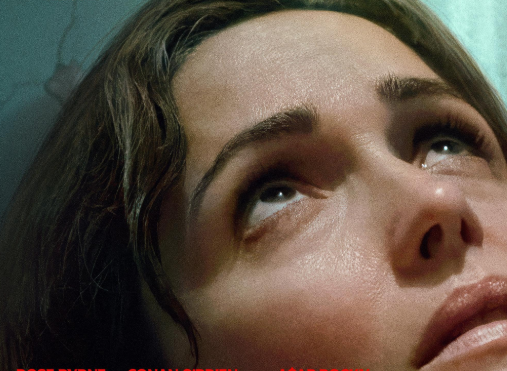
    Strange and unique at the same time. Writer/director Mary Bronstein’s If I Had Legs I’d Kick You is the kind of film that feels like it is made of patterns – emotional, visual, and psychological – and it weaponises those repetitions to explore how people break down internally while still trying to function externally. It adopts that distinctly A24-style storytelling: intimate, surreal, tonally ambiguous, and centred around a wonderfully complex lead performance. Rose Byrne delivers the film’s emotional backbone, embodying a person simultaneously pleading for help and pretending not to need any. Her existential outburst isn’t melodramatic, as it feels frighteningly recognisable.

    One recurring motif is the ritual of people hanging up on each other. It sounds simple, almost comedic, yet it slowly evolves into a language of abandonment, exhaustion, and emotional self-preservation. Characters withdraw not because they don’t care, but because they are drowning too. This feeds into the film’s central cycle: people who desperately need help trying to take care of others who also desperately need help. The film keeps whispering, “It’s not your fault,” while quietly asking: Then why does it still hurt so much?

    The otherworldly hole in the ceiling becomes a metaphor for intrusion – trauma leaking into the present, memory looping back on itself. Its circularity ties to the repeated emotional patterns and, more importantly, to synchronised healing, suggesting that recovery rarely happens alone. The film doesn’t explain the hole; it lets it echo.

    Even the parking lot problem becomes symbolic. It’s the mundane nightmare of modern existence – constantly circling, no space, no room to breathe, nowhere to leave the emotional baggage. Repetition becomes pressure; pressure becomes implosion.

    Communication in the film isn’t merely flawed; it’s chaotic. Voices overlap, interrupt, and distort, mirroring the inner noise of anxiety and paranoia. What we see and what is real drift apart, and perception becomes a threat of its own.

    Stylistically, the film is a descendant of a narrative mode once seen in HBO drama and now perfected by A24: the merging of surrealism with realism, the literal with the poetic. It is cinema that doesn’t resolve but provokes. The ending does not offer closure. You bring yourself to it, and what you get back depends on who you are and how you’ve lived.

    One last food for thought: Why don’t we get to see the daughter in whole?

    Thanks for reading!

    Please, don’t forget to share. If you enjoy my work and dedication to film, please feel free to support me on https://www.patreon.com/kaygazpro. Any contribution is much appreciated and valued.

    Solidarity for all the innocent lives that suffer the atrocities of war!

    Stay safe!
    A Bronx Tale (1993)

    0

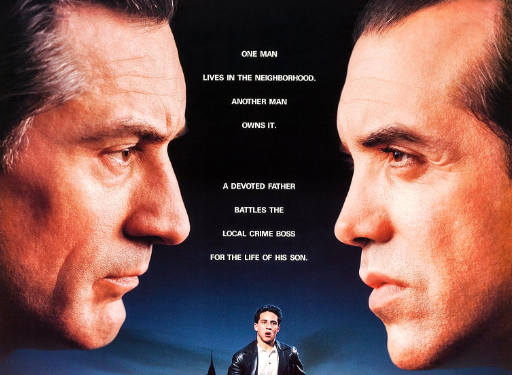
    The story is based on the autobiography of co-star Chazz Palminteri (Sonny), who, despite studio offers, refused to sell the rights unless he could write the screenplay and play Sonny. The only one he agreed with was lead actor Robert De Niro (Lorenzo), who also directed. In return, De Niro allowed Palminteri to be involved in many stages of the production, from casting to sound mixing.

    Kombucha (2025)

    Leaving his dream behind, a man joins a successful company that hides nothing but dark secrets.

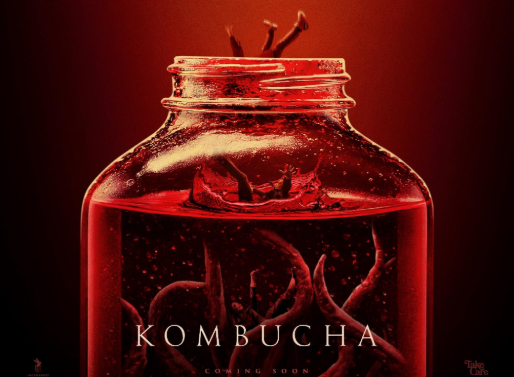
    Fun blend of humour, dread and sci-fi. When was the last time you heard “corporate” or “corporation” used for a good reason? You said, “Never?” Kombucha is a sharp, darkly comic slice of corporate sci-fi that disguises its existential dread behind humour, exaggeration, and an almost absurdly familiar workplace reality. It weaponises recognisable corporate rituals – performance check meetings, artificial enthusiasm, impossible deadlines, and obscenely inflated salaries and bonuses designed to anaesthetise modern servitude – and pushes them to the doppleg… I’m not saying anything else about it…

    At the centre of the film’s satire is its deceptively simple conceit: a kombucha that enhances productivity, focus, and compliance, slowly becoming indispensable to those who consume it. What begins as a wellness perk morphs into a chemical leash, binding employees to their work environment until they are alienated from the outside world, disconnected from loved ones, and, most disturbingly, estranged from their former selves.

    Writer Geoff Bakken and co-writer/director Jake Myers strike an effective tonal balance, blending humour, tension, and creeping unease. The comedy lands because it is grounded in truth: anyone who has sat through a performance review framed as “growth,” or been rewarded with perks instead of time, will recognise the trap immediately. The sci-fi elements function less as spectacle and more as metaphor, amplifying a reality that many already live in.

    The performances lean into hyperbole, but that exaggeration is precisely the point; a caricature sharpened to reveal something uncomfortably real beneath. Not without faults, Kombucha ultimately presents a bleak catch-22: abandon your creative and personal ambitions to become a well-fed corporate asset, or cling to idealism and survive on scraps in a system that punishes nonconformity. The film doesn’t claim there is no middle ground – but it strongly suggests that, as time passes and societal pressure tightens, choosing becomes inevitable.

    Funny, unsettling, and depressingly relatable, Kombucha recognises you and your pain.

    Thanks for reading!

    Please, don’t forget to share. If you enjoy my work and dedication to film, please feel free to support me on https://www.patreon.com/kaygazpro. Any contribution is much appreciated and valued.

    Solidarity for all the innocent lives that suffer the atrocities of war!

    Stay safe!
    Morgan Freeman

    0

    “Big budget movies can have big budget perks, and small budget movies have no perks, but what the driving force is, of course, is the script.”

    The Iron Claw (2023)

    A young wrestling prodigy comes of age under the shadow of his family’s tragic legacy, as success, loyalty, and grief collide inside and outside the ring.

    Following A24’s The Smashing Machine (2025): https://kaygazpro.com/the-smashing-machine-2025/, The Iron Claw (2023) feels almost like its quieter, more emotionally assured sibling – an outcome that makes its relative absence from major festival conversations all the more puzzling. Yet that very absence may offer a clue. Unlike louder, more self-consciously “important” biopics, Sean Durkin’s film is restrained, intimate, and self-aware, prioritising emotional truth over performative realism or awards-friendly spectacle.

    Durkin makes a crucial structural decision: he anchors the story almost entirely around Kevin Von Erich (Zac Efron), charting his journey from youthful optimism to adulthood under the crushing weight of the family’s so-called “curse.” This focus is not a simplification but a necessity. The real-life Von Erich tragedy contains so much death and loss that a fully comprehensive account would overwhelm the narrative and reduce Kevin’s arc to a footnote. By omitting certain events, Durkin preserves coherence while honouring the brothers, the parents, and the unspeakable grief that defined their lives – without turning suffering into spectacle.

    Efron’s performance is central to this balance. His physical transformation was not cosmetic but functional: months of intense training translated convincingly on screen, not as hyper-stylised athleticism but as embodied labour. The staged wrestling feels heavy, ritualistic, and believable – not because it mimics reality perfectly, but because it communicates effort, pain, and repetition. Wrestling here is not adrenaline-driven combat; it is performance, endurance, and identity. This stands in contrast to The Smashing Machine, where rapid cutting and an overemphasis on reactions drain energy from the fights themselves. The Iron Claw understands that believability is not about replication but about rhythm, weight, and consequence.

    Crucially, the film avoids pseudo-realism. The performances, across the board, embrace cinematic emotion rather than documentary distance. The parents’ denial, the brothers’ loyalty, and Kevin’s quiet collapse are heightened, yes, but never hollow. The result is tension that accumulates slowly, tragically, and honestly.

    As for festivals and politics, history has repeatedly shown that selection is not synonymous with value. What resonates with one jury may miss another entirely. Audiences are rarely affected by where a film premiered, but by what it leaves behind. And here, even for those not predisposed to admire Zac Efron, The Iron Claw proves his versatility and commitment, exceeding expectations with a performance grounded in discipline, vulnerability, and restraint.

    Sometimes the films that endure are not the loudest, but the ones that understand exactly what they are and never pretend to be more.

    Thanks for reading!

    Please, don’t forget to share. If you enjoy my work and dedication to film, please feel free to support me on https://www.patreon.com/kaygazpro. Any contribution is much appreciated and valued.

    Solidarity for all the innocent lives that suffer the atrocities of war!

    Stay safe!

    Miss Violence (2013)

    0

    According to director Alexandros Avranas, the film is based on a true story that is actually much more violent than he portrayed.

    The Smashing Machine (2025)

    Legendary MMA fighter Mark Kerr battles addiction, fame, and self-destruction while rising to the top of the brutal world of early mixed martial arts.

    Dramatic, but lacks the intended energy. Written and directed by Benny Safdie and produced by A24, The Smashing Machine arrives as a docudrama that openly echoes John Hyams’ The Smashing Machine (2002), but without capturing its raw urgency or lived-in brutality. Shot in a quasi-observational style, the film seems determined to blur the line between documentary and narrative cinema, yet that very commitment becomes its undoing. What many have celebrated as a daring formal choice ultimately feels flat, inert, and disengaged from its own subject.

    Much of the praise has centred on Dwayne Johnson’s (Mark Kerr) physical transformation and committed performance, and indeed, the film is constructed almost entirely around him. Kudos to Johnson for living up to and exceeding expectations. But this singular focus exposes a larger problem: Safdie’s direction rarely interrogates the character or the world around him in meaningful ways. Instead, the film becomes a showcase rather than an exploration, a portrait without depth or tension. That imbalance may explain why the film struggled to connect with audiences and disappeared from cinemas quickly, even as certain critics and high-profile filmmakers championed its seriousness and restraint.

    Audience resistance can be read on several levels. One, Johnson’s off-screen reputation for exerting creative control. Two, while the docudrama approach itself alienates viewers who expect visceral energy from a film about combat sports. But, in my humble opinion, it’s the third one.

    The most significant issue lies in filmmaking. The fight scenes – arguably the emotional and kinetic core of such a story – are anaemic. Safdie cuts aggressively during bouts, draining them of rhythm, weight, and momentum. Action is subordinated to reaction, with facial expressions and aftermaths replacing sustained physical engagement. This imbalance feels like cinematic “cheating,” an implicit admission that the film cannot – or will not – recreate the ferocity of real combat. Audiences wanted to see realistic recreations of the fights. Keep Warrior (2011) in mind, where drama and action coexisted in the same space without outbalancing one another.

    But an even more accurate comparison could be with Darren Aronofsky’s The Wrestler (2008). Aronofsky’s over-the-shoulder camerawork, attention to bodily detail, and respect for spatial continuity made each match feel punishing and intimate. Safdie adopts the surface grammar of docudrama but neglects the craft that gives it power; the energy that continuity editing emits. In The Smashing Machine, the preparation, the physical transformation, and the pseudo-realism amount to very little because when it is required to be realistic, it is not.

    Still, the film is not without merit. Its most compelling moments occur away from the ring, particularly in the confrontations between Johnson and Emily Blunt (Dawn). Blunt consistently cuts through the film’s steady pace, bringing an emotional explosion that the direction often lacks. If there is a reason to watch it, it lies in these exchanges, where human conflict finally replaces mockumentary, and the film briefly comes to life.

    Thanks for reading!

    Please, don’t forget to share. If you enjoy my work and dedication to film, please feel free to support me on https://www.patreon.com/kaygazpro. Any contribution is much appreciated and valued.

    Solidarity for all the innocent lives that suffer the atrocities of war!

    Stay safe!

    Preston Sturges

    0

    Eleven Rules for Box Office Appeal:

    1. A pretty girl is better than an ugly one.
    2. A leg is better than an arm.
    3. A bedroom is better than a living room.
    4. An arrival is better than a departure.
    5. A birth is better than a death.
    6. A chase is better than a chat.
    7. A dog is better than a landscape.
    8. A kitten is better than a dog.
    9. A baby is better than a kitten.
    10. A kiss is better than a baby.
    11. A pratfall is better than anything.

    Let the Right One In (2008)

    0

    The film’s sound effects were made using traditional methods:

    • Biting flesh was simulated by biting sausages.
    • Bloodsucking by drinking yoghurt.
    • And the sound of kids opening their eyes by rubbing grape skins together.

    The End of the World on Film

    0

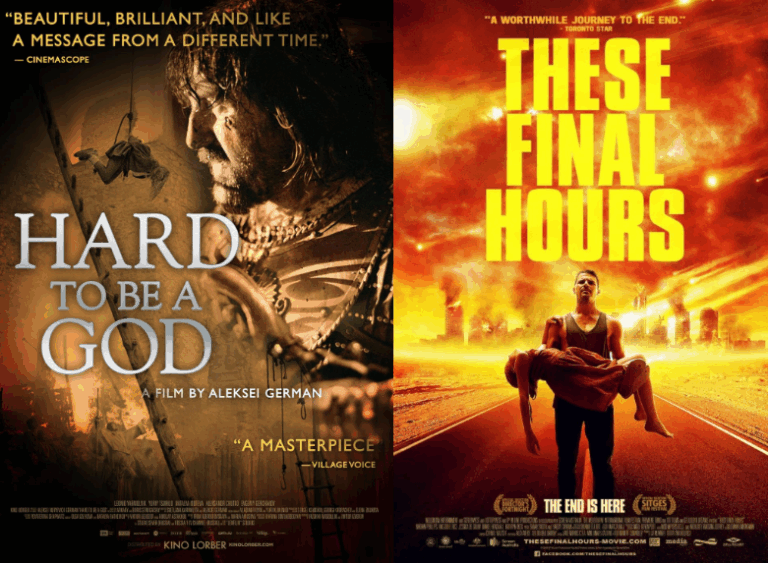
    The world is ending – but cinema shows us it’s never just about the disaster. From love and melancholy to chaos, satire, paranoia, and even humour, films across the globe reflect how humanity faces its final moments. How would you face the end?

    Image References: IMDb

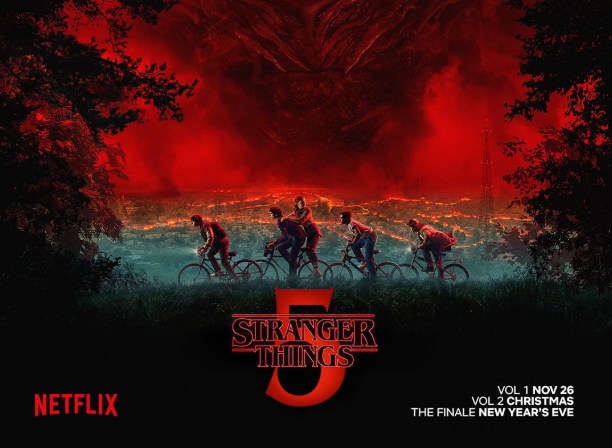
    Stranger Things (2016-2025)

    A group of children in a small 1980s town confront supernatural horrors and government secrets, discovering friendship, sacrifice, and an otherworldly adventure.

    A coming-of-age fantasy shaped by 80s cinema. Stranger Things is a coming-of-age series wrapped in fantasy, horror, and a deliberate divorce from reality. Across five seasons, it builds a world powered by nostalgia, cinematic references, and audiovisual storytelling techniques rooted firmly in the 1980s – most notably in the work and influence of Steven Spielberg. It is a series shaped as much by memory as by plot, and in that respect, it understands its mission perfectly.

    Spielberg’s shadow (either as a director or producer) looms large over Stranger Things, not just thematically but structurally. Films like E.T. the Extra-Terrestrial (1982), Poltergeist (1982), Gremlins (1984), The Goonies (1985), and the Indiana Jones trilogy (1981-1989) defined a mode of storytelling where childhood wonder collided with existential threat, where fantasy and science fiction were filtered through youthful perspective. These films, on the one hand, entertained audiences of the time, and on the other, they shaped how a generation understood fear, friendship, loss, and hope.

    Writers/directors The Duffer Brothers tap directly into that lineage. Its audiovisual language – bikes against suburban horizons, practical lighting effects, synth-heavy scores, shadowy government facilities, and monsters that feel tactile rather than abstract – recreates not just the look of the era, but its emotional texture. The first three seasons, in particular, are phenomenal in how they balance character, tension, spectacle, and pacing. The series excels at ensemble storytelling, rhythmic cross-cutting, and the “last-minute save” trope, in which parallel storylines converge just in time to avert catastrophe. These climaxes are engineered with precision, reinforcing the idea that collective effort, loyalty, and belief are what ultimately matter. Oh, and that kids will come out victorious against the evil or ignorant adults.

    However, where cinema benefits from restraint, long-form television risks excess – and this is where Stranger Things begins to strain under its own weight. There is a fundamental difference between a film like E.T. and a five-season series. Spielberg’s film allows for intimacy, economy, and emotional release within a contained narrative (approximately two hours). Stranger Things, by contrast, must escalate constantly. Child-led fantasy plans against overwhelming forces, excessive dramatisation of loss, cycles of self-blame, and repeated sacrificial gestures become structural necessities rather than emotional choices.

    Over time, these elements lose impact through repetition. The constant emphasis on guilt and responsibility, the increasingly nonsensical strategies devised under pressure, and the now-familiar visual shorthand – powers activated, nose bleeding, blood wiped away – begin to feel less like storytelling and more like “I’ve been seeing that shot for years”. What once signified danger and cost becomes expected punctuation. The camera cuts to emotional breakdowns grow predictable, and stakes that should feel devastating instead feel prolonged.

    This repetition doesn’t undermine the series entirely, but it does dilute its panache. The extraordinary becomes mundane when revisited too often, and emotional escalation loses power without variation or consequence. Can you remember how many times all the heroes/ines have blamed themselves for something, only to have someone else reassure them that it isn’t? And then switch roles?

    And yet, despite these flaws, The Duffer Brothers’ creation remains absolutely worth watching. It offers a form of safe-from-harm fantasy: a world where friendship matters, where evil can be confronted, where innocence is bruised but not annihilated. The series believes in its characters and its audience, and that belief carries it further than logic ever could.

    We may not see another series quite like it anytime soon. While (also) Netflix’s Dark (2017–2020) brilliantly explored an even darker, more fatalistic vision of 1980s-inspired storytelling – in Germany – Stranger Things occupies a different emotional space, one that derives from hope, nostalgia, and communal survival rather than inevitability.

    Flawed, repetitive, and occasionally indulgent, Stranger Things nevertheless stands as a defining series of its era: a love letter to the cinema that shaped generations, and a mnemonic of the enduring power of fantasy to help us grow up, together.

    Thanks for reading!

    Please, don’t forget to share. If you enjoy my work and dedication to film, please feel free to support me on https://www.patreon.com/kaygazpro. Any contribution is much appreciated and valued.

    Solidarity for all the innocent lives that suffer the atrocities of war!

    Stay safe!

    Sleepwalkers (1992)

    0

    End-of-year reviews: Forgotten, underperformed, overshadowed, and/or under-the-radar films over the decades – Part 6

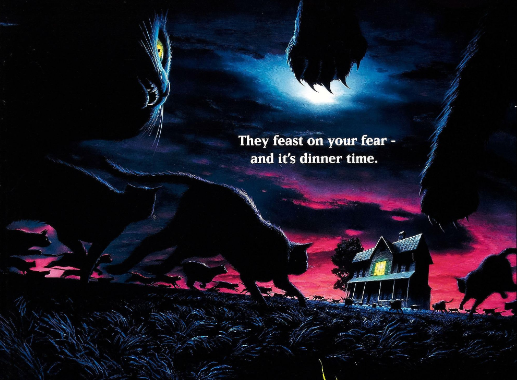
    A mother and son hiding a dark supernatural secret unleash horror in a small town where cats are the only creatures that can stop them.

    Very much flawed, deeply uneven, and yet oddly enjoyable. Escaping the coming-of-age theme (see previous reviews), Sleepwalkers is a film with more holes than Swiss cheese: over-the-top acting, wildly inconsistent pacing and rhythm, and narrative logic that collapses under even the gentlest scrutiny. And yet, it’s precisely the kind of film you forgive for all of it.

    Written by Stephen King and directed by Mick Garris, Sleepwalkers never pretends to be anything more than it is. It doesn’t take itself seriously – and neither should you. The premise is somewhere between outrageous and laughable: shape-shifting cat people who are lethally afraid of cats, who can make themselves (and objects) disappear, who casually change car brands mid-scene, and who engage in incest without the film ever fully processing how unhinged that idea actually is. The film throws absurdity at the screen with such commitment that resistance feels pointless.

    There is a very specific charm to how Sleepwalkers operates. Despite being released in the early ’90s, it feels firmly stuck in the ’80s – a time when B-movies thrived on illogical plotting, inexplicably unstoppable villains, and rules that changed whenever the story needed them to – the villain never runs, yet always stays ahead of the victim (rings a bell?).

    Sleepwalkers doesn’t aim to scare; it aims to entertain. Its pleasures lie in excess, and in watching a film fully commit to its own nonsense – oh, and how amazing Mädchen Amick and Alice Krige look. The performances are broad, the mythology is gloriously unstable, and the rules of the world are rewritten on the fly. There’s fun in spotting how little the film cares about plausibility – as long as it keeps moving.

    This is safe, harmless escapism. Not horror that unsettles, but horror that amuses. A relic of a time when genre cinema could be unapologetically silly, shamelessly indulgent, and completely unconcerned with coherence. Sleepwalkers may not be good by conventional standards – but it is entertaining, and sometimes, especially at the end of the year, that’s more than enough.

    Thanks for reading and Happy New Year, everyone!

    Please, don’t forget to share. If you enjoy my work and dedication to film, please feel free to support me on https://www.patreon.com/kaygazpro. Any contribution is much appreciated and valued.

    Solidarity for all the innocent lives that suffer the atrocities of war!

    Stay safe!
    The Fundamentals of Caring (2016)

    0

    End-of-year reviews: Forgotten, underperformed, overshadowed, and/or under-the-radar films over the decades – Part 5

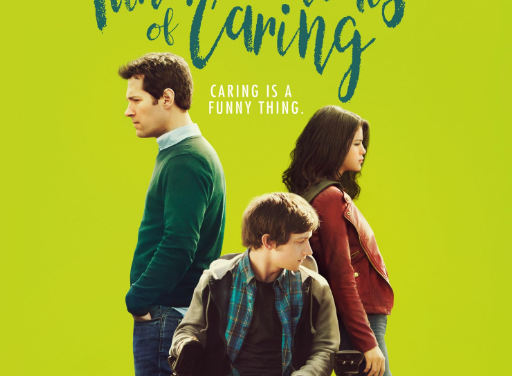
    A grieving writer and a cynical teenager embark on an unexpected road trip that changes their lives forever.

    Bittersweet, honest, and genuinely human. Following up on his performance in Submarine (2010): https://kaygazpro.com/submarine-2010/, Craig Roberts once again proves his strength in playing cynicism in one of Netflix’s most effective bittersweet comedies. Pairing Roberts with Paul Rudd is already a winning combination, and the film smartly builds its emotional core around that chemistry. Jennifer Ehle, Selena Gomez, and Julia Denton enhance that journey, making it bolder and braver.

    Based on the novel by Jonathan Evison, writer/director Rob Burnett brings to life a road movie that understands the quiet complexities of human connection. A road that surfaces faith and belief, disappointment and fulfilment, and emotional implosion and honesty. It explores life’s truths without sermonising, allowing its characters – and the audience – to arrive at meaning organically.

    Roberts leans once more into his trademark cynicism, but beneath it lies vulnerability, frustration, and a longing to be seen. You feel for him not because the film asks you to, but because his emotional logic is painfully recognisable: It’s a disabled kid trying to understand why his father abandoned him. Paul Rudd, meanwhile, does what he does best: delivering deadpan comedy while grounding the film with genuine dramatic weight. His performance is restrained, compassionate, and quietly devastating when it needs to be.

    Structurally, The Fundamentals of Caring is a classic hero’s journey disguised as a low-key indie road trip. It has a satisfying beginning, middle, and end – something increasingly rare in films that aim for emotional realism. The lessons it offers are never forced; they emerge naturally through humour, discomfort, and moments that occasionally catch you off guard, cutting your breath short just as easily as they make you laugh.

    Ultimately, this is a film about caring – not just for others, but for life itself, even when it disappoints you.

    And now, onwards to the last review of the year (following review)! Deliberately saved it for the end…

    Thanks for reading!

    Please, don’t forget to share. If you enjoy my work and dedication to film, please feel free to support me on https://www.patreon.com/kaygazpro. Any contribution is much appreciated and valued.

    Solidarity for all the innocent lives that suffer the atrocities of war!

    Stay safe!
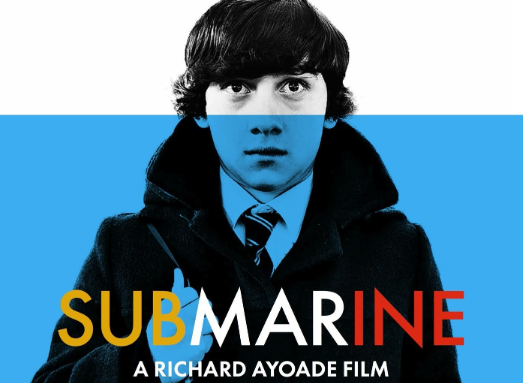
    Submarine (2010)

    End-of-year reviews: Forgotten, underperformed, overshadowed, and/or under-the-radar films over the decades – Part 4

    A socially awkward teenager navigates first love, family dysfunction, and the existential burdens of adolescence.

    A British coming-of-age of existential wit. Following up on Stand by Me (1986): https://kaygazpro.com/stand-by-me-1986/ and staying focused on the subgenre, Submarine is a distinctly British entry into the modern coming-of-age canon, akin to films like Comet (2014): https://kaygazpro.com/comet-2014-comedy-drama-romace/, Me and Earl and the Dying Girl (2015): https://kaygazpro.com/me-and-earl-and-the-dying-girl-2015-comedy-drama-romance/, 500 Days of Summer (2009): https://kaygazpro.com/500-days-of-summer-2009-comedy-drama-romance/, and It’s Kind of a Funny Story (2010): https://kaygazpro.com/its-kind-of-a-funny-story-2010-comedy-drama-romance/ – End-of-year reviews from a previous year.

    Esoteric and existential, the film navigates the weight of childhood insecurities, traumas, and the perplexing gulf between adults who have long forgotten – or never truly lived – what growing up feels like, and children who struggle to understand the rules, compromises, and disappointments of the adult world. This disconnect drives much of the film’s humour, melancholy, and most inner thoughts.

    Co-writer/director Richard Ayoade crafts a meticulously composed world, with a cold colour palette, and editing that reflect Oliver’s (Craig Roberts) interior life: introspective, awkward, and slightly surreal. Ayoade captures his reactions, framing both isolation and discovery with a subtle irony that complements the dry, cynical, witty script.

    Craig Roberts, Yasmin Paige, Noah Taylor, Sally Hawkins, and Paddy Considine deliver remarkable performances, bringing to life the complex, awkward, and sometimes painfully honest interactions that define Oliver’s world. Each character embodies the reciprocity of miscommunication between generations: children grappling with misunderstandings and adults who fail to meet them halfway. Ben Stiller’s influence as a producer is subtle but effective, guiding the film’s balance of melancholy and humour while allowing Ayoade’s singular vision to shine. A rare film that understands both the burdens of childhood and the compromises of adulthood.

    Thanks for reading!

    Please, don’t forget to share. If you enjoy my work and dedication to film, please feel free to support me on https://www.patreon.com/kaygazpro. Any contribution is much appreciated and valued.

    Solidarity for all the innocent lives that suffer the atrocities of war!

    Stay safe!
    Stand by Me (1986)

    End-of-year reviews: Forgotten, underperformed, overshadowed, and/or under-the-radar films over the decades – Part 3

    Four boys embark on a life-changing journey to find a dead body in the 1950s, discovering friendship, courage, and childhood bittersweet lessons.

    The timeless coming-of-age masterpiece. Following up on Moonrise Kingdom (2012): https://kaygazpro.com/moonrise-kingdom-2012/ Stand by Me is the absolute classic of coming-of-age cinema, a film that endures because it captures the very essence of growing up – the joy, excitement, fear, and uncertainty of leaving childhood behind and stepping into the world. Based on Stephen King’s novella The Body, it stands as one of the author’s finest adaptations, translating the subtleties of adolescence into a cinematic language both intimate and universal.

    At its heart, Stand by Me is about friendship, courage, and the bittersweet nature of memory. Director Rob Reiner crafts a film that is at once nostalgic and authentic, blending warmth with melancholy. Pay attention to the small gestures – the hesitant glance, the shared laugh, the worried frown – they create an intimacy that draws the audience directly into the world of four boys on a journey to witness a dead body. Cinematographer Thomas Del Ruth complements this with steady compositions and naturalistic lighting that imbue the Pacific Northwest setting with both beauty and foreboding. The framing of the boys against vast landscapes indicates how small we feel in the world as children, yet how enormous our experiences seem or can be.

    As for the film’s rhythm? Chris’s quiet internal struggles, Gordie’s literary-voiced reflections, Teddy’s anger and loyalty, and Vern’s comic relief are balanced against moments of tension and suspense throughout the journey. The editing allows both the subtle and the dramatic beats to breathe, giving the audience time to connect emotionally while maintaining narrative momentum.

    The A-list cast – Wil Wheaton, River Phoenix, Corey Feldman, and Jerry O’Connell – achieve a level of chemistry rare among child actors. Their performances feel lived-in and genuine, capturing the unspoken bonds and occasional conflicts that define friendship. Every viewer who remembers what it was like to roam, explore, and dare before the age of phones and the internet will find themselves relating to these characters, laughing with them, worrying with them, and ultimately feeling their triumphs and heartbreaks as their own.

    As I often like to say, Stand by Me is a mirror for anyone who has grown up. It takes us back to the transition from childhood to adolescence, which is messy, exhilarating, and profoundly emotional. It is a celebration of friendship, courage, and the fleeting, yet indelible, magic of youth – a timeless coming-of-age masterpiece that will continue to resonate across generations.

    The evolution of cinema, though, found more ways to explore the inner troubles of youth, something that leads me to my next review…

    Thanks for reading!

    Please, don’t forget to share. If you enjoy my work and dedication to film, please feel free to support me on https://www.patreon.com/kaygazpro. Any contribution is much appreciated and valued.

    Solidarity for all the innocent lives that suffer the atrocities of war!

    Stay safe!
    Moonrise Kingdom (2012)

    End-of-year reviews: Forgotten, underperformed, overshadowed, and/or under-the-radar films over the decades – Part 2

    On a small island, when a boy scout decides to abandon his camp, his team and authorities make it a mission to find him before a major storm hits.

    Colourful, eccentric, and emotionally precise. A modern coming-of-age fairytale that ranks among Wes Anderson’s very best work, arguably within his top three films. Every formal element is working in harmony here: acting, directing, cinematography, editing, music, sound design, and mixing come together with remarkable clarity of purpose.

    Anderson’s visual language is unmistakable. The warm yet contrastingly cold colour palette establishes the film’s delicate emotional balance, while meticulous framing – often centring characters within their environments, occasionally pushing them to the edges of the frame – reinforces themes of isolation, belonging, and self-definition. His signature camera movements, symmetrical compositions, and carefully curated design are all present and purposeful. Everything serves the story.

    As for the cast, Anderson always gets the best at roles that couldn’t be more suitable for them: Bruce Willis, Edward Norton, Bill Murray, Frances McDormand, Tilda Swinton, Jason Schwartzman, Bob Balaban, Jared Gilman, and Kara Hayward. Their performances match the precision of the craft. The eccentric adult characters drift between authority and absurdity, while the children possess an intellectual and emotional clarity that quietly exposes adult incompetence. This inversion is key to the film’s tone and meaning.

    Understanding the script’s intent is essential. While Moonrise Kingdom is a coming-of-age story, it is also a satirical examination of adult buffoonery seen through the eyes of children who already understand the world far better than they are supposed to. It is a film where every creative decision feels intentional, cohesive, and necessary. A whimsical surface conceals a deeply thoughtful meditation on youth, identity, and emotional refuge – proof that Anderson’s carefully constructed worlds can still feel profoundly human.

    While it shares the same subgenre with Stand by Me (1986), the comparison ends there. Anderson’s film operates in an entirely different register – stylised, ironic, and tender without sentimentality. Let’s see how different (following review)…

    Thanks for reading!

    Please, don’t forget to share. If you enjoy my work and dedication to film, please feel free to support me on https://www.patreon.com/kaygazpro. Any contribution is much appreciated and valued.

    Solidarity for all the innocent lives that suffer the atrocities of war!

    Stay safe!
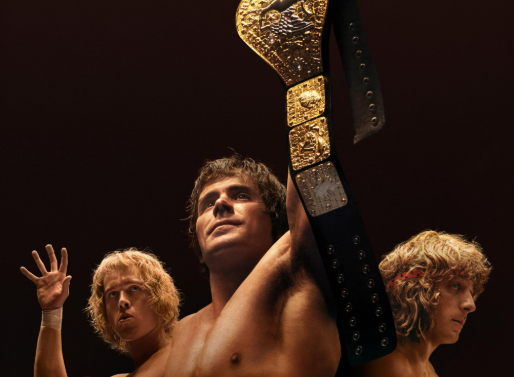
    Great Balls of Fire! (1989)

    End-of-year reviews: Forgotten, underperformed, overshadowed, and/or under-the-radar films over the decades – Part 1

    The ascent and descent of Jerry Lee Lewis, one of the most controversial rock ‘n’ roll legends.

    Wildly inaccurate, often problematic, and yet undeniably entertaining. Based on the book by Myra Lewis, Jim McBride’s film romanticises and fantasises events that were – and should have been – condemned, most notably the relationship and marriage between Jerry Lee Lewis and his teenage cousin, Myra Brown (later Lewis, the book author). The film smooths over moral outrage in favour of mythmaking, a choice that remains uncomfortable in hindsight. And for the record, it’s worth clarifying that Jerry Lee Lewis and Elvis Presley were friends, not rivals, despite what the film often suggests.

    These historical distortions matter. The film sugarcoats darkness that deserved sharper scrutiny. Yet despite its inaccuracies and ethical blind spots, Great Balls of Fire! crackles with energy, passion, and an almost reckless momentum that makes it difficult to dismiss outright.

    Three elements elevate the film significantly. The first is Dennis Quaid’s explosive performance as Lewis—charismatic, feral, self-destructive, and utterly committed. Quaid doesn’t so much play Jerry Lee Lewis as channel him, embodying the volatility that made Lewis both magnetic and catastrophic. The second is the ever-shining Winona Ryder, whose charm and charisma brighten every shot she is in, and that is to this very day! The third is the astounding editing by Lisa Day, Pembroke J. Herring, and Bert Lovitt, which gives the film its relentless drive and electric rhythm. The editing mirrors Lewis himself: fast, impulsive, and incapable of slowing down.

    Structurally, the film traces the rise and fall of a man whose talent and personality proved to be both blessing and curse. Like Elvis Presley, Lewis is portrayed as an artist whose gifts fuelled his ascent and guaranteed his collapse – his zenith inseparable from his nadir, his grace inseparable from his fall. There are lessons buried here about fame, excess, and unchecked ego, though the film rarely pauses long enough to interrogate them fully.

    Great Balls of Fire! was also one of several underperforming films from Orion Pictures, a studio that would sadly shut down a few years later.

    Flawed, troubling, and historically unreliable, Great Balls of Fire! nevertheless remains a visceral cinematic experience, powered by performance, editing, and sheer momentum, even when its moral compass spins wilder than Lewis himself on stage.

    Thanks for reading!

    Please, don’t forget to share. If you enjoy my work and dedication to film, please feel free to support me on https://www.patreon.com/kaygazpro. Any contribution is much appreciated and valued.

    Solidarity for all the innocent lives that suffer the atrocities of war!

    Stay safe!

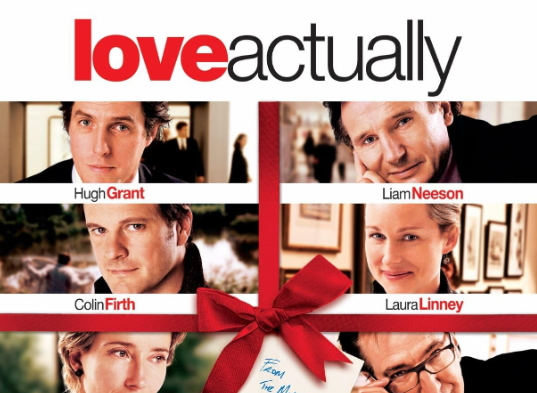
    Love Actually (2003)

    Around Christmas time, in contemporary London, people explore love in all its messy, joyful, and heartbreaking forms.

    Funny, sad, exciting, ordinary and everything else that comes in between. Love Actually embraces love rather than dissecting it. Richard Curtis’ confident directorial debut weaves a mosaic of interconnected stories set in a wintry London, each one exploring love in its many forms – romantic, platonic, unrequited, fleeting, enduring. It’s a film that understands a simple truth: love is messy, irrational, and often inconvenient, but it is also essential.

    Just look at the all-star cast: Hugh Grant, Emma Thompson, Alan Rickman, Liam Neeson, Laura Linney, Colin Firth, Bill Nighy, Keira Knightley, Chiwetel Ejiofor, Andrew Lincoln, Martine McCutcheon, Rowan Atkinson, Kris Marshall, Heike Makatsch, and Thomas Brodie-Sangster. From Hugh Grant’s disarmingly awkward Prime Minister to Emma Thompson’s quietly devastating moment of heartbreak, the performances balance humour and pain without one undermining the other. Bill Nighy may steal scenes with comedy, but the film never forgets that laughter and sadness are inseparable when it comes to matters of the heart.

    Curtis treats love as something that makes fools of us – and proudly so. We say the wrong things, take reckless chances, cross oceans on impulse, and risk humiliation simply to connect. These moments are celebrated. We are not meant to be alone. We need others to see us, challenge us, and, in some imperfect way, complete us.

    What gives Love Actually its lasting power is its sincerity. It refuses cynicism and believes -almost defiantly – that love can overshadow hate, that connection matters, and that the world is undeniably better when we allow ourselves to feel deeply. The initial and final airport montages (real, unscripted footage) capture this belief beautifully: love is everywhere, if we choose to notice it.

    In a divided world, Love Actually endures because it dares to be open-hearted. Love, actually, is what unites us. And that is the film I leave you with this Christmas.

    Thanks for reading! Be always well and Merry Christmas!

    Please, don’t forget to share. If you enjoy my work and dedication to film, please feel free to support me on https://www.patreon.com/kaygazpro. Any contribution is much appreciated and valued.

    Solidarity for all the innocent lives that suffer the atrocities of war!

    Stay safe!
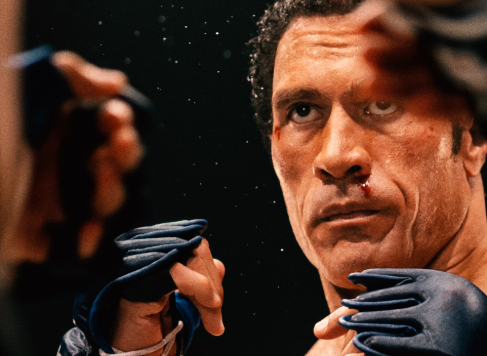
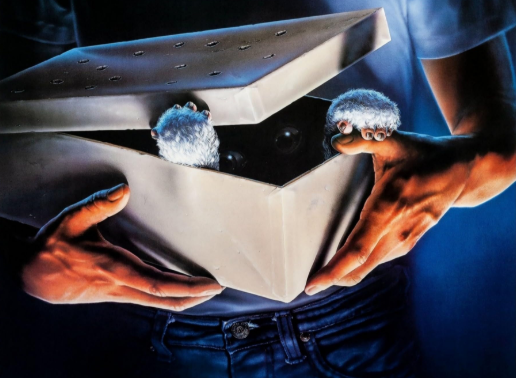
    Gremlins (1984)

    0

    A young man receives a Mogwai as a Christmas gift, but not knowing how to care for it, malevolent creatures emerge from it and terrorise the whole town.

    Pure gold Christmas nostalgia. This review is not here to analyse Gremlins through the lens of filmmaking theory or technical innovation. Its purpose is far simpler, and far more heartfelt: to remind you why this remains one of the most entertaining and unforgettable films to revisit during the Christmas season.

    Written by Chris Columbus (Home Alone, 1990), directed by Joe Dante (Innerspace, 1987), and produced by Kathleen Kennedy, Frank Marshall, and Steven Spielberg – no introduction needed – Gremlins is chaotic, mischievous fun for most of the family. In a world where problems multiply faster than these creatures once they get wet, this is the kind of entertainment you need to escape.

    The film displays a generous suspension of disbelief in its first act (Spielberg’s trademark), but rewards it then handsomely. The second act delivers energetic action, dark humour, and immense pleasure in watching practical animatronic creatures run amok. By the time the finale arrives, the film not only resolves its chaos but confidently sets the groundwork for Gremlins 2: The New Batch (1990). It’s no coincidence that Gremlins arrived in cinemas during an extraordinary year that also gave us Indiana Jones and the Temple of Doom, and Ghostbusters – 1984 was a gift to cinemagoers.

    Viewed today, the film arguably feels more brutal for younger audiences than it did at the time. But generations change, and so does perception. The gremlins’ deaths are often shockingly graphic, and Kate’s tragic monologue about her father remains unexpectedly dark for a film marketed as family entertainment. Yet none of this diminishes the film’s appeal; it deepens it.

    Despite not being directed by Spielberg, Gremlins carries his unmistakable imprint. As a producer, Spielberg shaped an entire decade of American cinema, and films like Gremlins, The Goonies, the Back to the Future franchise, and even Poltergeist stand as defining examples of that “Spielbergian” sensibility – films that balanced wonder, fear, horror, fantasy, humour, and emotional sincerity. True representatives of New Hollywood, of a time when mainstream cinema wasn’t afraid to be strange. By the way, we still revisit those years cinematically to this very day – see Stranger Things (2016-2025).

    Gremlins remains timeless, mischievous, and joyfully anarchic. Again, pure gold nostalgia – and a Christmas watch that still bites.

    Thanks for reading!

    Please, don’t forget to share. If you enjoy my work and dedication to film, please feel free to support me on https://www.patreon.com/kaygazpro. Any contribution is much appreciated and valued.

    Solidarity for all the innocent lives that suffer the atrocities of war!

    Stay safe!
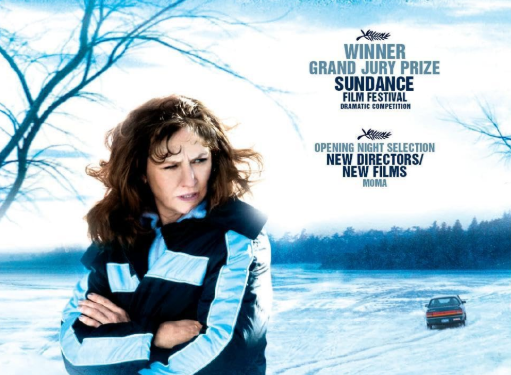
    Frozen River (2008)

    0

    Driven by poverty, two mothers turn to human smuggling along the U.S.–Canada border just days before Christmas.

    Uncomfortable and unsettling! Frozen River exposes a United States rarely acknowledged – one that exists beyond media narratives, political posturing, and manufactured realities. Writer/director Courtney Hunt’s stark debut pulls back the curtain on a country shaped by poverty, selective law enforcement, and systems designed to protect some while oppressing or ignoring others.

    The illusion of equal justice dissolves quickly here, revealing different rules for different people – and a brutal indifference toward the poor, the desperate, and Indigenous communities. Set along the frozen U.S.-Canada border, the film portrays the unbearable choices people are forced to make simply to survive, to the point that smuggling becomes less a crime than a symptom. Hunt never romanticises these actions, but she contextualises them with painful honesty, showing the audience how necessity can unite people just as easily as it divides them.

    The government’s presence is distant and conditional, but swift when pursuing its own citizens or so-called “illegal aliens.” It is also absent when it comes to protection, opportunity, or dignity. At its core, the film asks a simple, yet devastating question: Isn’t survival all anyone is really trying to secure?

    Frozen River is not cinema of impressions. There is nothing ornamental or performative in its approach. Its power lies in restraint; in its refusal to stylise suffering or aestheticise hardship. This is American independent cinema at its purest: grounded, unembellished, and hopeful and disheartening at the same time, precisely because it feels real. Not the poster child of a Christmas film, but this is Christmas for more people than you think.

    Melissa Leo delivers a remarkable performance, capturing exhaustion, defiance, and moral conflict with raw precision. Her portrayal never seeks sympathy, yet it earns it entirely. Hunt’s script and direction are equally assured, marked by clarity of vision and deep empathy without sentimentality.

    Frozen River is a must-watch! And if you have watched it, watch it again! It doesn’t ask to be admired. It asks to be acknowledged.

    Thanks for reading!

    Please, don’t forget to share. If you enjoy my work and dedication to film, please feel free to support me on https://www.patreon.com/kaygazpro. Any contribution is much appreciated and valued.

    Solidarity for all the innocent lives that suffer the atrocities of war!

    Stay safe!
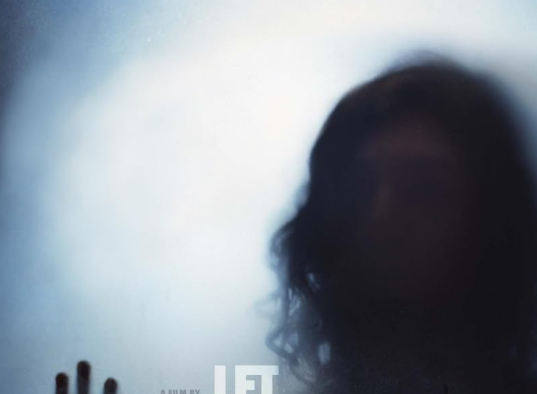
    Fritz Lang

    0

    “There was a time when all I looked for was a good story, but nowadays everything has to look like the size of Mount Rushmore, and the actors in close-up look as though they belong there.”

    Fearless (2006)

    0

    In the scene where actor Nathan Jones was supposed to lift and slam an extra to the ground, he got so into character that he ended up sending the extra to the hospital with broken ribs.

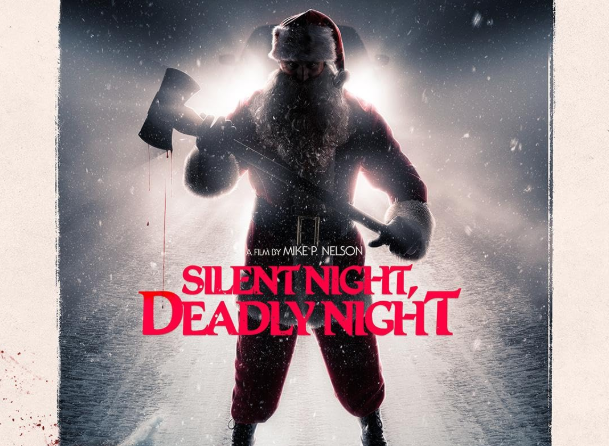
    Silent Night, Deadly Night (2025)

    0

    Having witnessed his parents’ brutal murder, a boy grows up, wears Santa’s suit and murders people who have been… naughty.

    Funny, horrific, and entertaining. Silent Night, Deadly Night (2025) carries clear DNA from the original, Silent Night, Deadly Night (1984): https://kaygazpro.com/silent-night-deadly-night-1984/, but this is not a remake content with nostalgia alone. While it acknowledges its roots through deliberate references, it confidently reshapes its identity into something far more contemporary. This time, Billy is not the villain, but the antihero. Think Dexter (2006) colliding with the tonal audacity of Strange Darling (2023): https://kaygazpro.com/strange-darling-2023/, wrapped in Christmas lights and soaked in blood.

    The film reframes its central figure through moral realignment. Every kill is justified within the film’s internal logic, aided by the addition of paranormal elements that elevate Billy’s crusade beyond simple slasher mechanics. Violence here is purposeful, almost ritualistic, as the axe swings not out of madness, but conviction.

    Narratively, the film unfolds with unmistakably Hollywood rhythms – particularly in its romantic arc – yet it maintains the atmosphere and texture of an independent production, reinforcing that Strange Darling–like tension between intimacy and menace. Intentional comedic elements surface throughout, but they never overpower the horror. Horror remains dominant, and the film commits fully to turning the holiday season into a festive bloodbath.

    Writer/director Mike P. Nelson, previously responsible for the atrocious woke Wrong Turn (2021): https://kaygazpro.com/wrong-turn-2021-horror-thriller/, delivers a markedly more substantial effort here. His direction is focused, energetic, and disciplined. Crucially, the film almost always earns its violence, carefully justifying both Billy’s transformation and his weapon of choice. The Santa suit becomes less the provocation it once was, and more a symbol of judgment, punishment, and seasonal irony.

    Rohan Campbell brings intensity and control to Billy, grounding the character’s moral ambiguity, while Ruby Modine (Pamela) provides a compelling counterbalance and completion. Together, they lay a solid foundation for what clearly feels like the beginning of a blood-soaked franchise revival (box office will be the judge of that).

    Silent Night, Deadly Night (2025) may trade pure psychotic villainy for moral complexity, but it loses none of its brutality. It’s a holiday horror film that understands its legacy, challenges its roots, and embraces the idea of the red in Santa’s suit.

    Thanks for reading!

    Please, don’t forget to share. If you enjoy my work and dedication to film, please feel free to support me on https://www.patreon.com/kaygazpro. Any contribution is much appreciated and valued.

    Solidarity for all the innocent lives that suffer the atrocities of war!

    Stay safe!
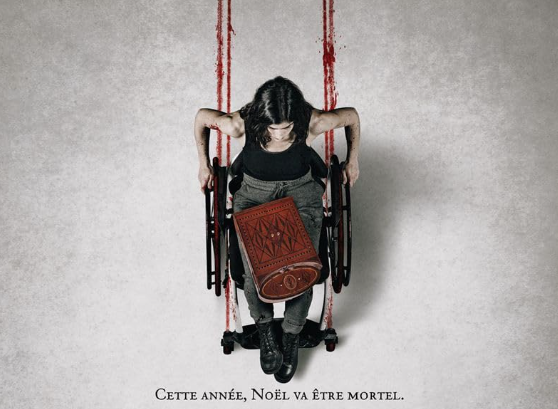
    The Advent Calendar (2021)

    0

    A paraplegic woman receives an Advent calendar from her best friend, but by Christmas, its gifts turn her life into a nightmare.

    Daring in its simplicity and devastating in its implications. Rooted in dark wishful thinking, the film arrives in the run-up to Christmas and poses a deceptively innocent question: Will you take the first step? Because once you do, there is no stopping. The only way forward is to see it through… to the very last door!

    What follows is a journey that is deliberately confusing, disorienting, messy, bloody, and defined by sacrifice. Each “gift” is both a blessing and a curse, offering fleeting bliss at a terrible cost. Writer/director Patrick Ridremont and Shudder understand the cruel mechanics of temptation: it takes everything from you to give you back the one thing you desire most.

    As the mystery deepens, the questions multiply. What is this calendar? Who made it? When? What purpose does it serve, and for whom? Is it simply a supernatural object, or a modern variation on the oldest bargain of all, selling your soul to the devil? The film wisely resists easy answers, allowing dread to fester in the unknown. But then, there is a fine balance between what you answer and what you don’t.

    Ridremont may not have reinvented the rules of horror, but his treatment of familiar conventions is precise and effective. Fast-paced montage sequences convey paranoia and encroaching madness, while slower, carefully measured moments create space for the supernatural to breathe. The film’s rhythm mirrors the calendar itself, each sequence leading inexorably to the next, forcing the audience to participate in the descent.

    At the centre of it all is Eugénie Derouand (Eva), whose performance anchors the film emotionally. She captures fear and shock with unsettling realism, but it is her transition into dark hope and guilty pleasure that truly sells the horror. We understand not just what she fears, but why she continues.

    The Advent Calendar is about temptation, consequence, and the price of desire. Once you open the first door, there is no going back. Not the most Christmas-y film of all time, but definitely one that horror fans will appreciate – especially this time of the year.

    Thanks for reading!

    Please, don’t forget to share. If you enjoy my work and dedication to film, please feel free to support me on https://www.patreon.com/kaygazpro. Any contribution is much appreciated and valued.

    Solidarity for all the innocent lives that suffer the atrocities of war!

    Stay safe!
    Mark Strickson

    0

    “There are three things that are important for a film. Number one is story, number two is story, number three is story. Good actors can save a bad script and make it bearable, but good actors can’t make a bad script good – they can just make it bearable.”

    Adult Swim Yule Log 2: Branchin’ Out (2024)

    The sole survivor of a murderous burning log tries to leave the country, but gets stuck in a Hallmark town where the log finds her.

    Bigger budget, bigger disappointment. Casper Kelly’s Adult Swim Yule Log (2022): https://kaygazpro.com/adult-swim-yule-log-2022/ worked because it broke the rules – and he did most of it by himself. It arrived disguised as background noise and slowly revealed itself as a sharp, self-aware satire of horror conventions – absurd, unexpected, and genuinely inventive. His sequel, Branchin’ Out, by contrast, arrives louder, bigger, and far more confident… and that confidence proves to be its undoing.

    The more Christmas-y sequel initially points its knives in an interesting direction, shifting its satirical focus toward Hallmark-style holiday films. On paper, this feels like a natural evolution. In practice, the joke overstays its welcome. What begins as parody quickly hardens into repetition, stretched so thin that by the final act, interest has all but evaporated.

    Where the first film thrived on surprise and escalation, this one feels oddly static. The satire is not sharpened or subverted – it is simply prolonged. The result is a film that is neither particularly funny nor meaningfully unsettling. Even its attempts at horror feel obligatory, lacking the anarchic bite and playful malice that made the original feel so fresh.

    Most disappointingly, Branchin’ Out adds little to the mythology or originality established by its predecessor. It mistakes excess for evolution and scale for creativity. Bigger budget, bigger canvas – yet nothing new painted on it.

    I guess, once you explain the joke for too long, it stops being funny. And once you repeat a subversion without reinventing it, it stops being subversive.

    Shame, really!

    Thanks for reading!

    Please, don’t forget to share. If you enjoy my work and dedication to film, please feel free to support me on https://www.patreon.com/kaygazpro. Any contribution is much appreciated and valued.

    Solidarity for all the innocent lives that suffer the atrocities of war!

    Stay safe!
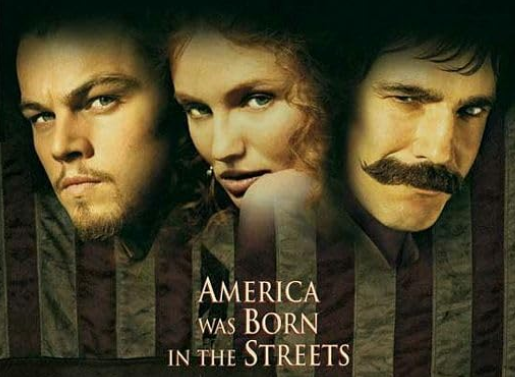
    Gangs of New York (2002)

    0

    Daniel Day-Lewis had his own glass eye and learned how to tap it with a knife without blinking his other eye.

    Adult Swim Yule Log (2022)

    0

    A couple’s romantic getaway turns into a nightmare when a group of podcasters crash it, and a serial killer and paranormal phenomena wreak havoc.

    Wrong Turn (2003) meets Strangers (2008) meets extreme obscenity – Christmas edition. Adult Swim Yule Log defies rules and conventions, takes itself not seriously, and offers a proper horror/comedy cinematic experience. A proper pseudo-Christmas delight with great performances from a truly diverse cast that does not feel forcedly woke.

    After 36 minutes of a static shot that is meant to make you sleep with on-screen and off-screen action, head-scratching humour, unexpected developments, and surrealistic audiovisual elements, writer/director/executive producer/lyricist Casper Kelly surprises his audience with a Lynchian-like comedy/horror that is utterly self-aware and on a mission to entertain you for Christmas. We are talking about genres and subgenres blending in a mash of folklore and hillbilly that seems to have emerged from Twin Peaks (1990-1991).

    This utterly pleasant, nonsensical hour and a half includes disturbing moments and hides subliminal messages that were not placed there accidentally. Think about it… Why would anyone make such a film? To what end? To appease what audience? Why mix and match audiovisual elements in a way that no one has done before to entertain you around a festive period with mixed feelings and emotions and a concoction of paces, rhythms and moods. I am deliberately giving away nothing. The last sequence provides enough food for thought to give you a chance to contemplate everyone’s role. And pay attention to the details, such as the bartender’s head and the head behind him. The devil lies in the details – you’ll see.

    BUT… think about all that after the end credits start scrolling. Until they do, accept everything you see and hear, question nothing, observe, and forget whatever concerns, worries, anxieties, or problems you may have. Because, hey, Adult Swim Yule Log 2: Branchin’ Out is next…

    P.S. If you are unaware of the “Adult Swim” concept, have a look online. It’s… different!

    Thanks for reading!

    Please, don’t forget to share. If you enjoy my work and dedication to film, please feel free to support me on https://www.patreon.com/kaygazpro. Any contribution is much appreciated and valued.

    Solidarity for all the innocent lives that suffer the atrocities of war!

    Stay safe!
    Philosophical Cinema and the Meaning of Existence

    0

    Cinema entertains, but also questions. From The Tree of Life to Cloud Atlas, Mr. Nobody, and Synecdoche, New York, some films dive into the mysteries of time, memory, and parallel realities. Are they offering escape, or are they showing us something deeper about existence itself?

    Image References: IMDb

    Diablo Cody

    0

    “Don’t ever agonize about the hordes of other writers who are ostensibly your competition. No one is capable of doing what you do.”

    Carnage for Christmas (2024)

    A trans podcaster returns home for Christmas, but what was once an urban legend takes flesh and blood and wreaks havoc.

    Badly made. I won’t waste your time here, so here’s how it goes. It starts off actually good. It feels like one of them where the utterances of a great story and the elements of animation will fill your imagination with images that will take you to the end of it – look for the example in the end.

    Carnage for Christmas starts off like that, but from the first murder onwards, it turns into a student project where most of the audiovisual elements are just wrong. It could have been a solid story; it focuses on the murderous plot and keeps the queer subplot to support it. Unfortunately, as mentioned, it is poorly made. I know it’s meant to be a comedy as much as a horror, but it is neither. Even the music feels out of place. It tries to add a neo-noir/detective element to something that visually does not fit the subgenre.

    Co-writer/director Alice Maio Mackay had the potential to make a film like that of her fellow Australian filmmakers, writer Lucy Campbell and director Matt Vesely – the example I promised you. Campbell and Vesely made Monolith (2022): https://kaygazpro.com/monolith-2022/, one of the best films you probably have never seen – immaculate storytelling that captivates from beginning to end.

    Shame really.

    Thanks for reading!

    Please, don’t forget to share. If you enjoy my work and dedication to films, please feel free to support me on https://www.patreon.com/kaygazpro. Any contribution is much appreciated and valued.

    Solidarity for all the innocent lives that suffer the atrocities of war!

    Stay safe!
    The Carpenter’s Son (2025)

    0

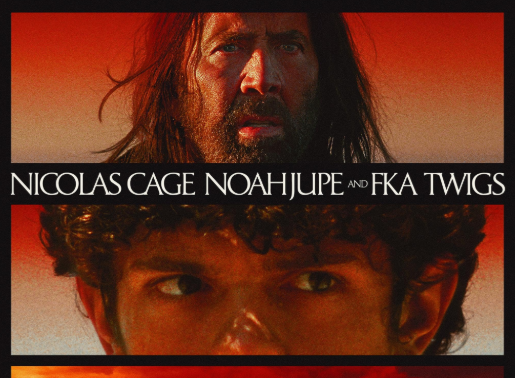
    Joseph and Mary hide in Roman Egypt, trying to protect teenage Yeshua from people, but also temptation, and the personification of evil.

    Eerie and definitely unique angle. The holy day is almost upon us, and what better first Christmas film review than teenage Jesus… horror edition! Before we move to the facts surrounding the film, though, here’s a thing or two about it. Producer/writer/director Lofty Nathan brought to life a version of young Jesus that you have not seen before, and chances are you have never read either – unless you’ve read “The Infancy Gospel of Thomas”. It is a version in which darkness and sinister forces surround him. People suffer, happiness is nowhere to be found, disease, famine, temptation, poverty, superstition… all surround a boy who knows nothing of where he comes from, nothing of what he can do, and nothing of who he will become.

    Everything you see is a sign of what the New Testament dictates he will encounter many years later. Magnolia Pictures believed in Nathan’s vision and invested in this slow-burning thriller/horror that is not meant to frighten the audience, but to challenge its perspective and emotions. Did they succeed in doing so? No matter what you read or hear, there will always be one way for you to find out.

    Nicholas Cage, FKA Twigs, Noah Jupe, Isla Johnston, and many great Greek actors give you a good idea of what things might have been like back then in a film that seems more medieval than anything else. If it’s a close depiction or not, I can’t tell you, but if it is, then not too many things changed until the 1400s.

    Are you religious? Are you not? Are you offended easily? Are you open-minded? Are you aware of the apocryphal scriptures? Do you know what the Bible comprises? What is your definition of God? Do you believe there is one? More? Do they have names? Do they care? The film managed to offend Christians and Muslims alike, and was characterised as a blasphemy. Was it its darkness? Holy books inspire fear, chaos, death, war, and the Apocalypse. No film or other book can even remotely match that. So think about it. What is it? The New Testament provided no details about Jesus’s life, and, in Jesus of Nazareth (1977), Franco Zeffirelli painted a beautiful picture of him that has characterised generations.

    There will always be even more questions than the ones stated above, but we’ll always be wondering: Was He? Who was He? Has He changed us? If yes, how? Now what?

    Thanks for reading!

    Please, don’t forget to share. If you enjoy my work and dedication to films, please feel free to support me on https://www.patreon.com/kaygazpro. Any contribution is much appreciated and valued.

    Solidarity for all the innocent lives that suffer the atrocities of war!

    Stay safe!
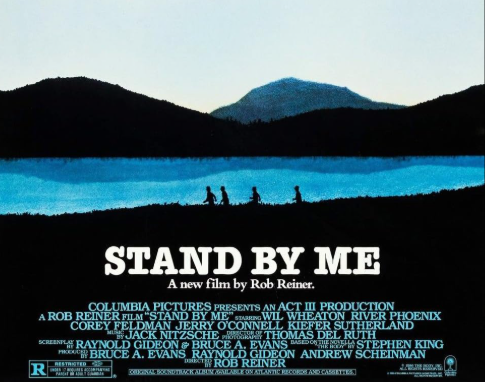
    A Blast (2014)

    0

    Angeliki Papoulia took boxing lessons to prepare for the role.

    John Huston

    0

    “If you make movies about movies and about characters instead of people, the echoes get thinner until they’re reduced to mechanical sounds.”

    Hellboy: The Crooked Man (2024)

    0

    Hellboy and a rookie end up in the Appalachians and decide to help a family in need against a local demon that terrorises the area.

    Flawed yet effective! It’s one of those reviews where I cut right to the chase. The visual effects are the film’s downside. They are not convincing, but they do not degrade the film either. The other downside is the money. Hellboy: The Crooked Man is not a Hollywood production. The budget is low ($20 million), and it shows; it also contributes to the low-quality visual effects.

    Having said that, the story is wicked, and the script is solid. Budget aside, it is a great adaptation and writer/director Brian Taylor has done a very good job bringing to life that script that he co-wrote and produced with Mike Mignola himself – the creator of Hellboy! If the money were more, it would be a more effective adaptation than Guillermo Del Toro’s. It is dark, eerie, atmospheric and faithful to the graphic novel. Pay attention to the things Hellboy says about himself and how he perceives his existence. These are the details that matter.

    Jack Kesy is a great Hellboy, but keep an eye out for the amazing Adeline Rudolph (Bobbie), as we will see her as Katana in Mortal Kombat II (2026) and in numerous other upcoming productions. All the cast does a great job, and notable credit also goes to editor Ryan Denmark for stitching it together.

    Making a film has never been an easy or straightforward process. Taylor and Mignola made a faithful adaptation, and you’ll only see that if you don’t compare it with previous Hollywood adaptations. It will not blow your socks off, but it is an intense, on-screen horror/graphic novel experience.

    Thanks for reading!

    Please, don’t forget to share. If you enjoy my work and dedication to films, please feel free to support me on https://www.patreon.com/kaygazpro. Any contribution is much appreciated and valued.

    Solidarity for all the innocent lives that suffer the atrocities of war!

    Stay safe!
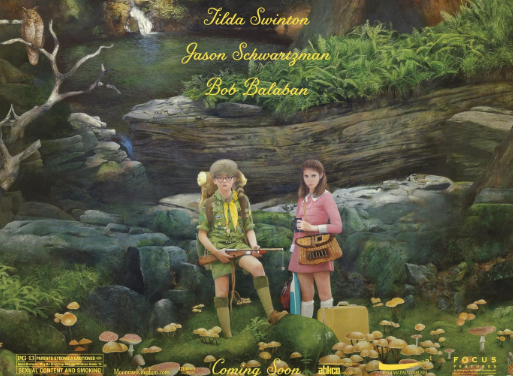
    Troll 2 (2025)

    A few years after the first Troll’s appearance, the same teams gather again as another Troll appears and wreaks havoc.

    Hollywood-style entertainment where you just accept everything that happens. Troll 2 is exactly what you expect it to be. Starting with a fictional Christian atrocity against the pagan creatures is only a parable of what the Christians did to the pagans when they spread the “love” in the country. Smart move, but it makes one wonder how they defeated the Trolls with swords back then, when in the present, with such advanced weaponry and tactics, they can’t. Mind-blowing, isn’t it? No, it is not. As said in the beginning, just accept everything, and you’ll be all right.

    Troll (2022): https://kaygazpro.com/troll-2022-action-adventure-drama/ left a positive aftertaste despite the fact that it was considered mindless entertainment. It had some positive elements of Hollywood, and the fact that it was in Norwegian and set in the fjords gave a Godgilla-like experience of the popular Scandinavian myth, with a few biopolitical messages. Co-writer/director Roar Uthaug comes back with the leading trio, but Troll 2 has nothing new to offer. The viewers take the formulaic narrative as a matter of course, take in the light humour, face slap themselves with the incompetent politicians and their politics (like in real life), and enjoy some montage sequences with military-style music that indicates determination and precision. And then everything goes to hell.

    There is one big positive, though. It is the entertainment you could use for less than two hours that will make you forget your problems and send you to bed. So, in that respect, it serves its purpose.

    Thanks for reading!

    Please, don’t forget to share. If you enjoy my work and dedication to films, please feel free to support me on https://www.patreon.com/kaygazpro. Any contribution is much appreciated and valued.

    Solidarity for all the innocent lives that suffer the atrocities of war!

    Stay safe!

    The Green Mile (1999)

    0

    In emotional scenes, the brilliant Michael Clarke Duncan (John Coffey) – RIP – would recall his father, who abandoned him as a child.

    Orson Welles

    0

    “I didn’t know what you couldn’t do. I didn’t deliberately set out to invent anything. It just seemed to me, “Why not?”… That was the gift I brought to Kane… ignorance.”

    Shelby Oaks (2024)

    Years after her sister disappeared, a woman finds new evidence that leads her to the occult and a sinister force.

    A hit and miss from many perspectives, but with a lot of potential. Shelby Oaks‘ found-footage first act sets the tone, pace and rhythm of the film you think you are about to watch. The second act begins, though, following a formulaic narrative, revealing the credits and unfolding the confrontation set up in the initial act. There are pros and cons in both acts, let’s have a look.

    The thriller/drama is real and intense: A woman who lost her little sister and sacrificed her happiness, spending years looking for her. Years later, evidence resurfaces in the most morbid and dramatic way, and the hunt for the truth begins again. That storyline, in and of itself, makes up for a suspenseful film and a very relatable heroine. This is the second-best aspect of the film. It is relatable! Mia (Camille Sullivan), as said, sacrificed everything in the process, and producer/co-writer/director Chris Stuckmann managed to depict that quite well.

    On the other hand, while the myth of the horror is appealing, its manifestation is unreal and a tad dull. Its removal would have been an asset to the film. Imagination and the use of offscreen can do things that digital VFX will never be able to. The demon and its various forms disrupt the thriller/drama’s nightmare and remind you that this is a film with VFX.

    The best thing that happened to this film and to Stuckmann is Camille Sullivan herself! She is excellent in this role and every other role she’s been in. If it weren’t for her, the film would have scored lower. If you want to see her, though, in a film that will blow your mind in the end, go for Hunter Hunter (2020): https://kaygazpro.com/hunter-hunter-2020-drama-horror-mystery/.
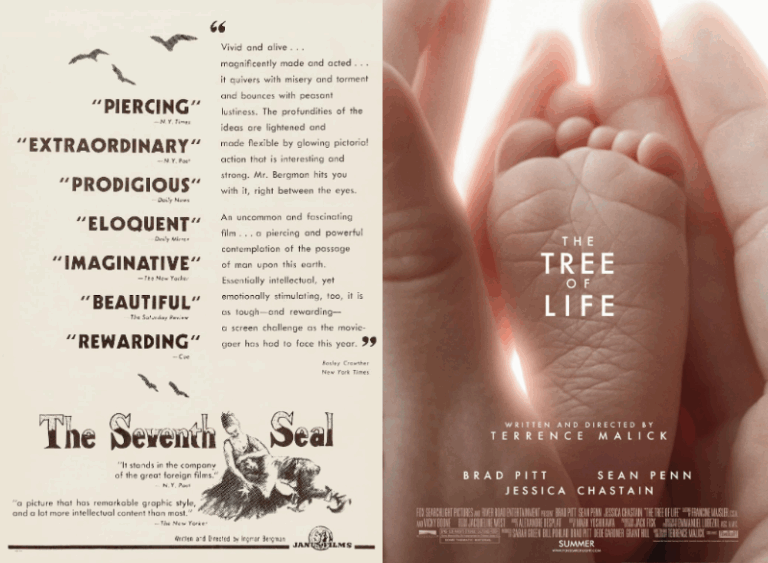
    NEON decided to invest in the film, and the one and only Mike Flanagan is also one of the many people who is wearing the producer’s hat. Shelby Oaks is a crowdfunded film, and congratulations to Stuckmann for making it. It’s not easy to make a film. Anything that can go wrong will probably go wrong. But he found the money, he cast Sullivan and the rest of the wonderful actors and actresses, and he made it. To me, there is a lot that doesn’t work, from script to screen, but at least he made it.

    Thanks for reading!

    Please, don’t forget to share. If you enjoy my work and dedication to films, please feel free to support me on https://www.patreon.com/kaygazpro. Any contribution is much appreciated and valued.

    Solidarity for all the innocent lives that suffer the atrocities of war!

    Stay safe!