More
    Home Blog

    Harakiri (1962)

    0

    Speaking of swords – accidentally – for the third time (check my previous two fun facts), the film’s lead, Tatsuya Nakadai, was genuinely afraid during filming as the swords used were real – a practice no longer allowed.

    Night Patrol (2025)

    A police officer discovers that a task force comprised of vampires organises an attack on the neighbourhood where he grew up.

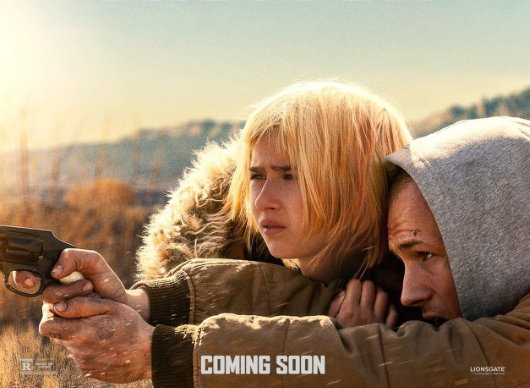
    A messed-up compass! So, Night Patrol, right? A film about… well… dirty cops, conspiratorial gangs, white demons, Zulus, black magic – throw them all into a blender and that’s roughly the experience. From the very beginning, the film signals that it does not take itself seriously and, crucially, does not expect you to do so either. The poster alone screams B-movie energy – and let’s be clear: B-movie is often synonymous with entertainment. The real question is what kind of entertainment this aims to be.

    Co-writer/director Ryan Prows attempts to weaponise Zulu ancestry against a white satanic force while simultaneously gesturing toward sociopolitical commentary. The problem? Its moral compass feels thoroughly scrambled. No group emerges particularly dignified or thoughtfully portrayed, and the film’s approach to race is, at best, careless and, at worst, insulting. Hopefully, no actual Zulu will ever watch this.

    Dialogue is saturated with the N-word, while an almost relentless stream of rap tracks runs throughout the film… with the N-word. Rather than creating texture or authenticity, the repetition becomes numbing, even distracting. What might have been intended as gritty or provocative instead risks reinforcing the very stereotypes it seems vaguely interested in critiquing. The portrayal of African-American characters repeatedly leans into familiar and tired imagery – the ghetto, the thug, the gangster – without sufficient nuance or subversion to justify the choice. Except for Xavier (Jermaine Fowler), the only decent character.

    Tonally, the script struggles to find its footing. It is not funny to function as satire, nor sharp enough to sustain serious engagement. As a result, the film floats in an awkward middle space where neither mode fully lands.

    For comparison, look at the work of Joe Begos and films like Christmas Bloody Christmas (2022): https://kaygazpro.com/christmas-bloody-christmas-2022/ and VFW (2019): https://kaygazpro.com/vfw-2019-action-crime-horror/ – genre cinema that embraces excess while remaining energetic, self-aware, and, importantly, not alienating in its provocations. And then there is Justin Long, who unfortunately continues a streak of projects that fail to showcase his strengths.

    Messy, provocative, occasionally energetic – but ultimately a film whose compass spins a little too wildly to fully guide its audience.

    Thanks for reading!

    Please, don’t forget to share. If you enjoy my work and dedication to film, please feel free to support me on https://www.patreon.com/kaygazpro. Any contribution is much appreciated and valued.

    Solidarity for all the innocent lives that suffer the atrocities of war!

    Stay safe!
    Nancy Meyers

    0

    “Movies don’t look hard, but figuring it out, getting the shape of it, getting everybody’s character right, and having it be funny, make sense and be romantic, it’s creating a puzzle.”

    Bugonia (2025)

    Two conspiracists kidnap a woman, the CEO of a prestigious company, accusing her of being an alien and wanting to destroy the Earth.

    Lanthimos does what he does best. He pulls the rug from under genre, tone, and expectation. While it simply looks and sounds like it aims to confuse, it adds misdirection and turns it into a kind of sensory cat-and-mouse game.

    Bugonia looks like a conspiracy satire. You get feverish monologues delivered with absolute conviction, a cocktail of peasant slang and overly polished vocabulary with pseudoscientific nonsense and weirdly accurate observations. Anti-corporate rhetoric flows freely – sometimes generic, sometimes unexpectedly close to the truth. The messengers are social outcasts, “hillbillies” rejected by society, carrying unresolved trauma and resentment that blur the line between insight and delusion. Lanthimos never mocks them outright, but he never fully redeems them either.

    Then there’s the music. Old-fashioned orchestral cues surge in at moments that feel deliberately overemphasised – sometimes to underline emotion, sometimes to distort it, sometimes simply to make you question why you’re being told to feel something at all. Whether these moments are justified or ironic is left hanging, and that uncertainty becomes part of the experience.

    In Will Tracy and Jang Joon-hwan’s script lies an idea that’s both absurd and funnily logical: corporations and aliens are essentially the same thing. Both are (or act like) non-human entities, both lack empathy, and both have quietly (or maybe not so quietly) taken over the world. The film toys with familiar cosmic paranoia – alien invasions, hidden rulers, unseen forces, flat Earth – while contrasting it with something far less speculative. No proof is needed to show that corporations dominate modern life; we live inside that reality every day. Bugonia thrives in that overlap, where the unbelievable and the obvious become indistinguishable. I’ve said it before, there is no way the word “corporate” enters a sentence and gives it a positive connotation. See, Kombucha (2025): https://kaygazpro.com/kombucha-2025/.

    What truly keeps the film alive, though, is unpredictability. Being a Lanthimos film, there’s never a clear sense of how things will escalate, where they’ll tip into violence, comedy, tragedy, or something else entirely. That constant instability is its greatest strength.

    Emma Stone and Jesse Plemons deliver performances that feel fully attuned to this off-kilter world – controlled, unsettling, and often darkly funny – Alicia Silverstone is an excellent addition. They anchor the madness without explaining it, which feels exactly right. But really express it! Which is the polar opposite of his previous film, Kind of Kindness (2024): https://kaygazpro.com/kinds-of-kindness-2024/, which I had omitted reviewing but did just before this one for comparison and contrast (emphasis on behavioural hollowness and acting flatness).

    Bugonia (like Kinds of Kindness and his earlier films) may not offer answers, but it offers something else: the “itchy” feeling of not knowing where you stand, only that something deeply unsettling is about to happen – not knowing where, when, what, how, or why. But it’s going to happen.

    Thanks for reading!

    Please, don’t forget to share. If you enjoy my work and dedication to film, please feel free to support me on https://www.patreon.com/kaygazpro. Any contribution is much appreciated and valued.

    Solidarity for all the innocent lives that suffer the atrocities of war!

    Stay safe!
    Cinematic Escalating Paranoia: Control & Chaos

    0

    From Mother! (2017), turning a quiet house into a warzone, to Eddington’s (2025) small-town feud exploding into battle, cinema thrives on escalation. These films start in control – an argument, a party, a dispute – and spiral into chaos, across genres from horror to comedy. Why does this spiral grip us so deeply?

    Image References: IMDb

    Kinds of Kindness (2024)

    Three stories about people who seek the truth in their distorted realities.

    Arthouse cinema is still alive. It’s been some time, but I remember before entering the screening, someone turned to me and asked, “Really? That’s almost three hours.” My answer simply was: “If the narrative is strong and engaging, time disappears.” So… does it?

    From the outset, the deliberately wooden, emotionally flattened performances signal a clear return to the early sensibilities of co-writer/director Yorgos Lanthimos. Characters repeat each other’s names with clinical precision, responding in ways that feel performative, awkward, and humanly detached. Which is not bad acting; this is an A-list cast: Emma Stone, Jesse Plemons, Willem Dafoe, Margaret Qualley, Hong Chau, Mamoudou Athie, and Yorgos Stefanakos. So, I would argue it is highly controlled stylisation. The awkwardness is the point.

    What unfolds across the film’s three distinct (or perhaps not entirely distinct?) worlds is a reality that looks like ours but never quite behaves as ours does. Actions feel off-beat. Reactions arrive half a second too late. Dialogue sounds as if it has been filtered through an unseen puppeteer (Lanthimos). The effect is dreamlike – or perhaps nightmare-adjacent – as though we are watching human behaviour rewritten.

    There is a clear creative kinship with the work of David Lynch – or tribute, if you may. Alongside writer Efthimis Filippou and editor Yorgos Mavropsaridis (lifelong collaborators), Lanthimos constructs multilayered narrative spaces filled with recurring motifs: food rituals, obedience, dreams/nightmares, impostor anxieties, sexual compulsions, chanting music, and those wonderfully dissonant and unsettling piano notes that seem to arrive from nowhere.

    So, do the three hours fly by? No. They do not. If mainstream narrative and pacing are your comfort zone, the film will feel long and intentionally abrasive. But for viewers attuned to Lynchian frequencies, such as Twin Peaks (1990), the experience is intellectually and aesthetically rewarding – even if time remains very present.

    Kinds of Kindness is not built for universal appeal, which is why there are mixed reactions. It is built as a controlled experiment in tone, rhythm, and behavioural distortion. For some, it will feel alienating. For others, it will feel like a loving, carefully constructed homage that keeps a certain cinematic legacy very much alive.

    Thanks for reading!

    Please, don’t forget to share. If you enjoy my work and dedication to film, please feel free to support me on https://www.patreon.com/kaygazpro. Any contribution is much appreciated and valued.

    Solidarity for all the innocent lives that suffer the atrocities of war!

    Stay safe!
    Pirates of the Caribbean: The Curse of the Black Pearl (2003)

    0

    Speaking of swords (check my previous fun fact), according to the film’s screenwriter, Terry Rossio, Will Turner (Orlando Bloom) is the best swordsman, followed by Barbossa (Geoffrey Rush) and Commodore Norrington (Jack Davenport), with the worst being… Jack Sparrow (Johnny Depp)!

    A Big Bold Beautiful Journey (2025)

    Two lonely people embark on a journey that leads them to different eras and to all the things they could have done differently.

    Great ride, but some ingredients are missing. There is nothing realistic or even sensible about A Big Bold Beautiful Journey – and that, in theory, is perfectly fine. Life itself rarely makes sense. The problem is not its whimsy; it’s the absence of the emotion it so clearly aims to evoke.

    The introduction works beautifully. There is charm, intrigue, and a promise that something meaningful is about to unfold. But once the journey truly begins, the momentum softens. A mysterious door stands in the middle of a forest, leading to fragments of the past where others perceive the protagonists as their younger selves. It is a wonderfully absurd premise. Yet the characters accept it almost too easily. There is no hesitation, no existential tremor – just a gentle wandering from one symbolic door to the next. The fantastical becomes casual, and in doing so, it loses some of its magic.

    Thinking back to director Kogonada’s After Yang (2021): https://kaygazpro.com/after-yang-2021-drama-sci-fi/, also starring Colin Farrell, a similar emotional restraint hovers over crucial moments. The tone is delicate, almost hushed, but at times that restraint turns into emotional flatness. The mysterious car agency – hinted at as something larger, perhaps agents of fate or destiny – never quite embraces its potential mysticism. It feels functional rather than transcendent.

    The film positions itself as a light fantasy/comedy/drama. The comedy is indeed light, occasionally charming. But the drama is where it should have soared. Scenes between Sarah and her mother, in particular, feel designed to break hearts. Instead, they gently tap on them. Seth Reiss’ script and Kogonada’s direction seem hesitant to fully surrender to emotional excess. And yet, the cast does what it can. Colin Farrell brings quiet vulnerability (see the moment with his dad), Margot Robbie radiates aching fragility to the point of self-destruction, and Phoebe Waller-Bridge and Kevin Kline offer gravitas.

    For all its shortcomings, the film provokes reflection. It becomes a lonely, almost therapeutic fantasy for those who feel consciously lost, searching for direction while pretending they have one. It made me philosophise, which means it offered substance. I only wish it had dared to dive deeper into the uneasy blend of harsh pseudo-realism and boundless wishful fantasy.

    Thanks for reading!

    Please, don’t forget to share. If you enjoy my work and dedication to film, please feel free to support me on https://www.patreon.com/kaygazpro. Any contribution is much appreciated and valued.

    Solidarity for all the innocent lives that suffer the atrocities of war!

    Stay safe!
    Curtis Hanson

    0

    “You can dress it up, but it comes down to the fact that a movie is only as good as its script.”

    Return to Silent Hill (2026)

    After having received a distress letter from the love of his life, a man returns to Silent Hill, a town now consumed by darkness, to save her.

    Unfortunately, bad! Unlike Primate (2025): https://kaygazpro.com/primate-2025/, which was expected to be mediocre at best, Return to Silent Hill is disappointing in a far more deflating way – because it should have worked. Co-writer/director Christophe Gans had time, resources, and the blessing of Konami to craft something genuinely dark, unsettling, and grotesque. Silent Hill is an atmosphere, a philosophy of dread, a slow psychological suffocation that consumes all living and non-living entities inside it – especially when the deafening siren blares off. And yet, what emerges here is an oddly hollow echo of that legacy.

    There are moments – isolated shots, brief visual ideas – where the film flirts with competence. But they are buried under incoherent sequencing, overbearing CGI, and a general sense that cheaply-made spectacle has replaced meaning. Silent Hill’s horror was never about excess; it was about implication, physical and mental decay, and existential unease. Here, digital effects dominate to such an extent that the film actively breaks the believability of its own dark fantasy.

    The script is the primary offender. It lacks structure, rhythm, and emotional logic. Scenes feel stitched together rather than organically progressing, and the editing only worsens the issue, giving the film a strangely cheap, straight-to-DVD aesthetic. Instead of dread, there is confusion; instead of unease, noise.

    This raises the central question that continues to plague video game adaptations: what do you keep, what do you discard, and, most importantly, why? Visual fidelity alone is not adaptation. Recreating iconography without understanding its function strips it of power. Silent Hill’s monsters, voices, sounds, and fog were haunting, yes, but guilt, repression, and psychological punishment had always been the sources of manifestation.

    Ultimately, Return to Silent Hill feels like a film that knows how the game looks but not how it feels. And without that understanding, no amount of backing, time, or nostalgia can resurrect its soul.

    Thanks for reading!

    Please, don’t forget to share. If you enjoy my work and dedication to film, please feel free to support me on https://www.patreon.com/kaygazpro. Any contribution is much appreciated and valued.

    Solidarity for all the innocent lives that suffer the atrocities of war!

    Stay safe!
    Sin City (2005)

    0

    The swords used by Miho (Devon Aoki) are the same ones used by the Crazy 88 in Kill Bill: Vol. 1 (2003). Tarantino had kept them stored in his garage.

    Primate (2025)

    0

    A house party turns into a massacre when a pet chimpanzee pet gets rabies.

    I don’t want to say much about this one – and frankly, the film doesn’t give you much to work with beyond surface-level shocks.

    The acting is competent across the board, but it’s squandered on characters that are either deeply unrelatable or actively unpleasant. Watching Troy Kotsur follow up an Oscar-winning performance in CODA (2021) with Primate feels like a genuine waste of talent, even if, according to IMDb, he enjoyed the experience. Enjoyment, however, does not translate into narrative value.

    Co-writer/director Johannes Roberts made a film that leans heavily on casting enormously good-looking actresses – Johnny Sequoyah, Jess Alexander, and Victoria Wyant. But aesthetic appeal is not a substitute for character, motivation, or coherent writing. The main problem here is the script. Hawaii, being the only U.S. state without rabies, becomes a narrative crutch rather than an intelligent plot device. Even so, the film’s internal logic collapses quickly: chimpanzees may be poor swimmers, but they can swim, and if Ben were rabid, the resulting aggression would not conveniently discriminate between in- and out-of-water contexts. The film behaves as though biology bends to screenplay convenience, and it does so repeatedly (see also the closet scene).

    The handling of captivity is equally absurd. Characters respond to confinement with such baffling stupidity that emotional investment becomes impossible. There is no tension because there is no empathy; the audience is never given a reason to care whether anyone survives.

    Ironically, this works in the film’s favour during its more brutal moments. Ben himself, thanks to effective prosthetics, animatronics, and performance, is convincingly realised. The deaths are visceral and occasionally entertaining precisely because detachment reigns. If characters are going to die, they might as well do so spectacularly.

    Lastly, the film’s central premise, keeping a chimpanzee as a pet, treating it as a toy, locking it in a cage, and waving a teddy bear to pacify it, is not provocative or tragic. It’s just moronic. That this arrangement predictably ends in violence is not shocking one bit, just inevitable.

    Thanks for reading!

    Please, don’t forget to share. If you enjoy my work and dedication to film, please feel free to support me on https://www.patreon.com/kaygazpro. Any contribution is much appreciated and valued.

    Solidarity for all the innocent lives that suffer the atrocities of war!

    Stay safe!
    Akira Kurosawa

    0

    “The characters in my films try to live honestly and make the most of the lives they’ve been given. I believe you must live honestly and develop your abilities to the full. People who do this are the real heroes.”

    Die My Love (2025)

    0

    A young mother starts suffering from postnatal depression, slips into paranoia while her husband tries in vain to help her.

    A ticking bomb from its opening moments. At first, everything is fine with the young couple exploring their artistic and sexual desires. But parenthood looms as a source of pressure rather than desire or joy. Loneliness metastasises into estrangement, and estrangement curdles into emotional and psychological explosion.

    Co-writer/producer/director Lynn Ramsay constructs a world where irritation becomes torment: the persistent buzz of a fly, a dog’s relentless barking, and an almost cruelly cheerful musical backdrop form an audiovisual assault that mirrors the protagonist’s internal collapse and her other half’s implosion. These sounds invade the film and are weaponised against both character and viewer. The contrast between surface normalcy and internal catastrophe is the film’s most unsettling strategy.

    As the narrative expands to include an ageing couple grappling with the natural corrosion of body and mind, the film’s psychological tension deepens. Mental deterioration is not isolated to youth or motherhood; it is universal, inevitable, and terrifying. What emerges is a continuum of decay – mental, emotional, physical – suggesting that this is not an exception, but a trajectory. And this is how Ramsay decides to depict it.

    From a filmmaking perspective, Seamus McGarvey’s day-for-night cinematography lends the world an unreal, dreamlike instability, as if even time itself is untrustworthy – a nod to Grace’s point of view. Toni Froschhammer’s editing complements this with rhythmic fractures and stutters, which manifest Grace’s mental state and create moments when coherence feels briefly unattainable – intentionally so.

    The performances are just extraordinary. Jennifer Lawrence (also executive producer) delivers one of her most raw and exposed performances, while Robert Pattinson (also executive producer) continues his streak of unsettling, emotionally opaque roles. Sissy Spacek and Nick Nolte top up the devastation, embodying lives worn thin by time. Lakeith Stanfield, as always, adds gravity with minimal effort.

    Ramsay once again proves her mastery in portraying psychological imbalance, echoing the shocking intensity of We Need to Talk About Kevin (2011) and the existential violence of You Were Never Really Here (2017). Though different in narrative shape, Die My Love spiritually resembles films of psychological descent such as Repulsion (1965) or Possession (1981): https://kaygazpro.com/possession-1981-drama-horror/ – cinema where the true horror is not external, but internal. Mostly, though, it comes very close to Baby Ruby (2022): https://kaygazpro.com/baby-ruby-2022-drama-thriller/. Yet another film that must not be ignored.

    This is not an easy watch. Nor should it be. Die My Love is a brutally honest depiction of postnatal depression, transforming moments culturally framed as “beautiful” into a waking nightmare – for the sufferer and for everyone orbiting them.

    Thanks for reading!

    Please, don’t forget to share. If you enjoy my work and dedication to film, please feel free to support me on https://www.patreon.com/kaygazpro. Any contribution is much appreciated and valued.

    Solidarity for all the innocent lives that suffer the atrocities of war!

    Stay safe!
    Eclipsed (2026) – Coming Soon

    0

    A journey through science, visuals, and personal stories that seeks to find ways for people to reconnect with the night sky… and what we’ve lost.

    Website: https://eclipsedfilm.com/

    Why is Stephen King still the King

    0

    From Carrie to It to The Mist, Stephen King’s stories keep shaping cinema across generations. What makes his horror timeless? It’s not the monsters – it’s the human fears that create them. Discover why Stephen King still rules.

    Image References: IMDb

    Peter Bogdanovich

    0

    “The lack of film culture is one of the things that really upsets me. There’s this complete lack of interest in anything that was made longer than ten years ago… It’s like ignoring buried treasure, but it’s not even buried. It’s right there.”

    Mimikos and Mary (1958)

    0

    Like a Greek tragedy, the film is inspired by the true story of Marie Weber, a German expatriate teacher to the royal family, and Michalis Mimikos, a Greek army doctor, in the late 19th century. Their paths crossed, they fell in love, but when she told her father she wanted to marry him, he forbade it. In despair, she jumped from the Acropolis. Unable to bear life without her, Mimikos took his own life with his weapon. Their graves still attract visitors today.

    The Rule of Jenny Pen (2024)

    After suffering a stroke, a former judge is admitted to a nursing home where a psychopath terrorises the patients.

    Great notion and amazing performances. The Rule of Jenny Pen is a stripped-down, low-budget, single-location horror that projects a crucial truth: the most unsettling terror rarely needs monsters, blood, or elaborate mythology. A locked door, a shared corridor, and time will do.

    Writer Eli Kent, co-writer/director James Ashcroft, IFC Films and Shudder construct a slow-burning mystery/thriller set almost entirely within a nursing home, where dignity quietly erodes alongside the body. At its centre is an old man defined by pride – intellectual, moral, personal – who finds himself hospitalised and abruptly stripped of authority, independence, and identity. What follows is not a sudden collapse, but a gradual, humiliating unravelling.

    Opposite him stands the film’s true horror: another resident, physically stronger, disturbingly lucid, and utterly unbound by empathy. This man rules the home through psychological cruelty, exploiting weakness not out of survival, but pleasure. His presence accelerates the degradation already built into the system, transforming neglect into something actively malevolent.

    Three distinct horrors operate simultaneously. First, tyranny – emerging not in grand political systems, but in places designed for care. Second, the baffling incompetence and indifference of those tasked with protecting the vulnerable, whose absence feels as threatening as any antagonist. And finally, the most frightening truth of all: the inevitable decay of mind, body, and spirit. No villain is required for that. As said, time will do.

    Geoffrey Rush, John Lithgow, and George Henare deliver performances of remarkable restraint. Lithgow, in particular, is deeply unsettling and shocking to the core! His villain is historically familiar, recognisable, and therefore impossible to dismiss.

    What is not shocking is that his performance slipped past major festivals unnoticed. The film offers no comforting metaphors, no fashionable outrage, and no political packaging. Is this why? The festivals maintain their political trajectory, achieving more and more of their agendas, excluding performances such as this, leaving people to lose more and more faith in institutions that should be awarding merit alone.

    The Rule of Jenny Pen is highly recommended for horror fans willing to face a sobering possibility: this is not a story about “them.” It may well be a glimpse of where we are all headed.

    Thanks for reading!

    Please, don’t forget to share. If you enjoy my work and dedication to film, please feel free to support me on https://www.patreon.com/kaygazpro. Any contribution is much appreciated and valued.

    Solidarity for all the innocent lives that suffer the atrocities of war!

    Stay safe!
    Guillermo del Toro

    0

    “The saddest journey in the world is the one that follows a precise itinerary. Then you’re not a traveler. You’re a f@cking tourist.”

    Greenland 2: Migration

    Years after the comet hit the Earth, the Garrity family must leave the bunker and cross a ravaged Europe in search of a new home.

    Exactly what it promises to be – no more, no less! Following the events of Greenland (2020): https://kaygazpro.com/greenland-2020-action-drama-thriller/ The film sticks to a familiar disaster-movie rhythm: brisk, efficient action sequences driven by clear obstacles, followed by slower pauses filled with romance, family bonding, and that unmistakable strain of Hollywood sentimentality. The pacing knows when to accelerate and when to breathe, and while none of it is surprising, it is competently assembled to keep the audience engaged without exhaustion.

    This time, the heroes’ journey flips direction. The northward scramble for survival becomes a desperate migration south, as the scorched Earth and lingering comet debris fade into the background. The real danger now isn’t the planet, but what’s left of humanity. Scarcity, distrust, and the fractured remnants of civilisation largely replace firestorms and falling debris, shifting the film neatly from apocalyptic spectacle to post-apocalyptic survival. It’s a logical evolution, even if it never pushes beyond safe narrative territory.

    Director Ric Roman Waugh reunites with Gerard Butler and Morena Baccarin, and the familiarity works in the film’s favour. Butler settles comfortably into the role he has perfected here: the everyman father whose entire moral compass is his family, willing to endure anything to protect them. Baccarin, once again, brings emotional weight that grounds the story, communicating grief, resilience, and quiet strength without needing melodrama. Their chemistry remains the franchise’s emotional anchor.

    The film delivers scripted but suspenseful challenges, presenting problems and solutions with just enough realism to feel credible within a Hollywood framework. Nothing truly surprises, and nothing overstays its welcome. This is not a sequel aiming for reinvention or cultural relevance; it knows its lane and stays in it.

    Greenland 2: Migration won’t spark long debates or critical re-evaluations, but it doesn’t need to. It’s a solid, unpretentious survival thriller – the kind of film that lets you switch off, forget your own worries for ninety minutes, and enjoy the ride while it lasts.

    Thanks for reading!

    Please, don’t forget to share. If you enjoy my work and dedication to film, please feel free to support me on https://www.patreon.com/kaygazpro. Any contribution is much appreciated and valued.

    Solidarity for all the innocent lives that suffer the atrocities of war!

    Stay safe!
    Close to Eden (1991)

    0

    The first Russian film to be nominated for an Oscar. Previous nominations were under the Soviet Union.

    Keeper (2025) 

    0

    Isolated in a remote cabin, a woman begins experiencing visions and contradictions that turn reality into a nightmare.

    Experimental, uncomfortable, but utterly confused. Writer Nick Lepard, director Ozgood Perkins, and Neon developed Keeper with unease rather than explanation in mind. See the opening sequence, for example: the music doesn’t match the visuals, and vice versa. Instantly, you don’t know what to expect or how to feel – hence, the unease. And that feeling follows you throughout both acts. As for the third one, well, you’ll see for yourselves.

    The film constantly pits image against sound, destabilising perception and forcing the viewer into a state of quiet alertness. Add a cabin in the woods to that equation, and the promise of safety is already cracked before the story even settles.

    Confusion is not a byproduct here – it’s kind of a design. What is wrong with her? Why does she behave this way? Why do other women seem to recognise something in her visions? Is this presence psychological, supernatural, symbolic, or all of the above? The film throws questions like bait and rarely offers clean answers. Even seemingly random elements, like the fish, carry a sense of wrongness, as if the world itself is slightly misaligned.

    Tatiana Maslany anchors the film with a performance that is anything but ordinary, even when the character tries to be. She is astonishing not because she overplays, but because she doesn’t. The tension lives in what she withholds. Again, you’ll see for yourselves.

    Personally, though, what truly unsettles is not the ambiguity of the threat, but the clarity of one idea: the terror of physical power used as control. The most disturbing moments are not supernatural but real – when a man physically prevents a woman from acting simply because he can. Masculinity here is not heroic or even tragic; it is depicted as toxic, coercive, and at times criminally unhinged. And the way I interpret it is that the horror isn’t that this force exists – it’s that it’s recognisable.

    Perkins has openly described Keeper as an experiment, deliberately distinct from Longlegs (2024) and The Monkey (2025). That intention is evident. The film resists conventional pacing, resolution, and catharsis. For viewers open to mood-driven, interpretive horror, that can be invigorating. For others, it may feel withholding or nonsensical to the point of frustration.

    And that raises the unavoidable question: who is this film for? Who is any film for? There is a fine balance between artistic identity and audience engagement. Horror fans seek experimentation, yes – but they also seek some form of satisfaction, and studios seek return. Perkins walks a tightrope with the kind of cinema he has chosen, and while his films are bold, they are also risky.

    Thanks for reading!

    Please, don’t forget to share. If you enjoy my work and dedication to film, please feel free to support me on https://www.patreon.com/kaygazpro. Any contribution is much appreciated and valued.

    Solidarity for all the innocent lives that suffer the atrocities of war!

    Stay safe!
    How Netflix Shapes What You Think You Want

    0

    Every time you watch Netflix, it watches you back. From recommending shows to greenlighting projects, the algorithm rewards safe formulas – but can limit originality and risk-taking. Discover how your viewing choices shape what makes it to the screen, and why your remote might be more powerful than you think.

    Image References: IMDb


    Eden (2024)

    Separate groups of people leave the world behind, settle on a remote island, but turn against each other.

    Brutality with a purpose. Eden is not interested in comforting its audience, but in projecting humanity’s oldest fantasy – starting over – and its most consistent failure: destroying every so-called paradise we touch. Co-writer/director Ron Howard strips survival down to its rawest question: when everything is taken away, what remains of our morals – if they were ever truly there to begin with?

    Set against the aftermath of world-scale death and collapse (WWI), Eden follows people who flee civilisation not to build something better, but to escape what they have seen humanity become. An island promises rebirth. Clean air. Clean conscience. Yet the film never pretends that geography can cleanse psychology. Hunger, fear, vanity, and ideological rigidity creep in quietly, then take over completely. Will corruption return, or has it actually never left?

    The script is tight, the characters clearly defined, and the pacing deliberate without ever feeling indulgent. Every moral position feels provisional, every belief fragile. Nihilistic philosophies collide with hollow hope, and ideals that once sounded noble collapse the moment survival demands compromise. Do principles survive starvation? Does community exist without advantage? Is cruelty a failure of humanity – or its most honest expression?

    Cinematically, Eden never overreaches. Performances are grounded, stripped of theatricality, allowing the brutality to feel lived-in rather than staged. Jude Law, Ana de Armas, Vanessa Kirby, Daniel Brühl, Sydney Sweeney, and the rest of the cast are excellent choices. Twists arrive not as shock tactics, but as inevitable consequences of earlier choices. The suspense doesn’t come from what will happen, but from who will break first – and how far they’ll fall once they do. The soundtrack subtly accompanies the dark emotions and feelings, which are more often than not projected onto the weather (pathetic fallacy). The ending pulls the audience forward not through spectacle, but through dread rooted in recognition.

    And yet, despite its superb cast, everyone’s efforts, and that it’s based on an actual, intriguing, fascinating, and breathtaking story, Eden largely disappeared upon release – financially and critically – not because it failed, but because it demanded attention rather than offering escapism. It asks viewers to pay for discomfort, for a disturbance that feels uncomfortably familiar rather than sensationally new. In an industry addicted to immediacy and noise, subtle existential horror is easy to overlook.

    Eden may not offer hope, but it offers clarity, which can be far more unsettling.

    Thanks for reading!

    Please, don’t forget to share. If you enjoy my work and dedication to film, please feel free to support me on https://www.patreon.com/kaygazpro. Any contribution is much appreciated and valued.

    Solidarity for all the innocent lives that suffer the atrocities of war!

    Stay safe!
    Clint Eastwood

    0

    “I tend to put down the auteur theory because a lot of people embraced it as a one-man/one-concept kind of thing, and making a movie is an ensemble.”

    The Rip (2026)

    When a group of cops receives a big tip about stashed money, loyalties shift, and everyone turns on one another.

    Easily digestible, action-packed thriller. Writer/director Joe Carnahan does what he knows best. From Narc (2002) to Smokin’ Aces (2006) to Boss Level (2020), Copshop (2021), Carnahan has always thrived in controlled chaos, and here he delivers an action/thriller that understands momentum, suspicion, and the pleasure of watching trust erode in real time.

    In a team that has known each other for years, familiarity turns into doubt and loyalty into leverage. No one is clean, no one is safe, and no one seems to be telling the whole truth. Whose money is it? Where did the tip come from? Who is making a move, and who is reacting too late? The film piles questions on top of one another, constantly shifting alliances and motivations, keeping the viewer guessing just long enough before pulling the rug again. The double-crosses, the last-minute reveals, the moral compromises – they’re all familiar, but they’re delivered with confidence and pacing that make them work.

    Matt Damon and Ben Affleck reuniting on screen carries its own weight, and they prove – nearly four decades after their early beginnings – that their chemistry is still intact. Also, great performances by Steven Yeun, Teyana Taylor, Catalina Sandino Moreno, Sasha Calle, Scott Adkins, and Kyle Chandler.

    Nothing in Netflix’s The Rip is revolutionary. There’s no single scene that demands to be analysed to death, no thematic statement screaming for attention. Instead, the film offers something arguably rarer: competence. The build-up works, the action lands, the plot holds together, and the tension rarely drops, regardless of certain cliches.

    It’s an easy watch in the best sense – ideal for a night in with your partner or your mates, where the twists spark conversation rather than confusion. The closing tribute to real-life Miami Police Department Captain Chris Casiano, whose investigation inspired the film and who lost his son to leukaemia in 2021, adds a quiet note of gravity that grounds the spectacle in something real.

    Sometimes, delivering exactly what you promise is more than enough – and The Rip delivers.

    Thanks for reading!

    Please, don’t forget to share. If you enjoy my work and dedication to film, please feel free to support me on https://www.patreon.com/kaygazpro. Any contribution is much appreciated and valued.

    Solidarity for all the innocent lives that suffer the atrocities of war!

    Stay safe!
    Animals Are Beautiful People (1974)

    0

    It took 3.5 years and 152 kilometres of film to complete this wonderful 90-minute documentary.

    Twineless (2025)

    0

    Two grieving strangers form an unexpected bond that forces them to confront loss and loneliness, and to ultimately move forward.

    One of those films that quietly earns its place in my end-of-the-year reviews. Bittersweet without being heavy, tender without becoming sentimental, it carries what could be called a kind of lying honesty: emotions that arrive gently, but stay with you long after the credits roll. Writer/director/actor James Sweeney delivers a film that confidently joins the landscape of contemporary queer cinema while remaining refreshingly unburdened by didacticism.

    Twineless is about grief, loneliness, and the slow, awkward process of self-acceptance. What makes it resonate is not the novelty of its themes, but the ease with which it allows them to breathe. The film never presses its emotional weight onto the viewer’s chest; instead, it lets moments unfold naturally, trusting silence, humour, and restraint as much as dialogue. There is warmth here, but also discomfort – the kind that feels recognisably human.

    The performances are its major strength. Dylan O’Brien (Roman/Rocky) and James Sweeney (Dennis) share an easy, believable chemistry, grounding the film in vulnerability rather than performance bravado. Aisling Franciosi (Marcie) adds the right amount of naivety that, in the end, steps up, while Lauren Graham (Lisa) makes every shot she’s in more beautiful than it already is. Together, they give flesh and blood to characters who grieve, isolate themselves, resent, and occasionally self-sabotage – yet keep searching for a way to love themselves honestly. Not perfectly, but truthfully.

    What Twineless avoids, perhaps most admirably, is agenda. It does not posture politically or moralise identity or sexual orientation. Instead, it suggests something far simpler and far more radical: that all genders are equally flawed because all humans are flawed. Everyone makes poor choices, everyone longs for connection, and everyone needs to be seen – not corrected, not packaged, just understood.

    Suspense is sustained not through spectacle, but through information – who knows what, why, and how and when it will be revealed. The balance between audience awareness and character knowledge shifts with precision, creating tension rooted in empathy rather than shock. The film understands exactly when viewers want something revealed and when the characters themselves are ready to face it.

    In resisting both cruelty and simplification, Twineless stands as a strong addition to American independent cinema – humane, sincere, and disarmingly honest. Not loud, not showy, but deeply felt.

    Thanks for reading!

    Please, don’t forget to share. If you enjoy my work and dedication to film, please feel free to support me on https://www.patreon.com/kaygazpro. Any contribution is much appreciated and valued.

    Solidarity for all the innocent lives that suffer the atrocities of war!

    Stay safe!

    Miranda July

    0

    “I write down the idea in my notebook, and then I put a little letter in the corner. S for the story, N for novel, M for movie, A for art, P for performance, B for business. This makes me sound totally rigid. I am also lots of fun! Totally wild! Party!”

    Psycho-biddy Horror: Monsters, Glamour, and Survival

    0

    From Psycho to Misery, psycho-biddy horror turned Hollywood’s grande dames into figures of fear — giving them powerful roles, but also playing into ageism and misogyny. Was it empowerment, exploitation… or both?

    The Running Man (2025)

    A paradoxical spectacle that ultimately lets down. The Running Man looks ferocious, sounds electrifying, and moves at breakneck speed, yet hesitates to fully embrace the philosophical darkness that made Stephen King’s original novel – and even the 1987 adaptation – so unsettlingly prophetic.

    King’s The Running Man remains diachronically relevant because it diagnosed something far deeper than flashy violence: a society willingly numbed, morally eroded, and pacified by spectacle. In the early 1980s, when reality television was still tame, and Orwell’s 1984 felt abstract rather than imminent, King foresaw a culture drifting toward intellectual atrophy and ethical collapse. The original film translated that into a dystopia where justice had evaporated, the state was hollow, and mega-corporations governed through ratings, brutality, and mass distraction. That future, disturbingly, no longer feels like science fiction.

    Edgar Wright’s version pushes the setting further into cyberpunk territory – high technology, glossy excess, and non-existent morals – but it does so at a time when reality itself has arguably outpaced satire. Our own entertainment ecosystem has become louder, crueler, and more vapid; audiences more desensitised, more complicit. In that sense, Wright’s The Running Man is less shocking than reflective. It no longer warns us of what might come – it depicts, to a lesser extent, what already is.

    Where the film falters is not in craft but in conviction. The two-hour-plus runtime delivers relentless, impeccably choreographed action, kinetic editing, and Wright’s trademark audiovisual bravura. Yet the dystopia often feels like a backdrop rather than a driving force. Ben Richard’s (Glen Powell) motivation – fighting for his family – registers as obligatory rather than existential, and the ideological purpose of the games is barely interrogated. Alongside Powell, Lee Pace, Michael Cera, Josh Brolin and the rest of the cast are solid choices, but they are all overshadowed by the narrative. Most damaging is the familiar Hollywood shortcut of the fickle crowd: the masses switching allegiance overnight, as seen in a painful manner recently in Superman (2025) and The Fantastic Four (2025). This narrative laziness misunderstands both crowd psychology and audience intelligence, reducing complex social behaviour to a convenient plot lever.

    Ultimately, The Running Man excels on a sensory level but softens King’s brutal thesis about the collapse of human dignity. The darkness is present, but it is overwhelmed by spectacle – yet another example that Hollywood still struggles to stare directly into the abyss it so profitably exploits.

    Thanks for reading!

    Please, don’t forget to share. If you enjoy my work and dedication to film, please feel free to support me on https://www.patreon.com/kaygazpro. Any contribution is much appreciated and valued.

    Solidarity for all the innocent lives that suffer the atrocities of war!

    Stay safe!
    The Curious Case of Benjamin Button (2008)

    0

    Several elements – like hummingbirds flying backward (the only bird in the world that can), cyclones spinning clockwise in the Northern Hemisphere and counterclockwise in the Southern, and reversed clocks – are among the reversed motifs that accompany Benjamin Button’s backward life.

    Kapodistrias (2025)

    As Ioannis Kapodistrias strives to unite a newly liberated Greece and rebuild its identity, his moral resolve is tested by rivalry, betrayal, and the heavy cost of leadership.

    A divisive story about unity. There are films that divide audiences, and then there are films that expose the divisions that already exist. Yannis Smaragdis’ Kapodistrias manages both. It became a superb example of unity and fracture at once – not only thematically, but socially. Critics overwhelmingly attacked it; audiences overwhelmingly embraced it. The harsher the reviews became, the longer the queues for the cinema grew, and they still grow. This fascinating oxymoron alone is reason to look closer.

    Visually, the film is often striking. Aris Stavrou’s cinematography frames Greece as both mythic and intimate: sweeping landscapes, aristocratic interiors, and modest living quarters coexist in painterly light. The deliberate, sometimes questionable, alternation between static and handheld camera is not random; at times it captures the stillness of political ceremony, at others the instability of a nation being born. Not every choice is equally motivated, but the intention is palpable – to place the viewer in both history and immediacy.

    The performances range from decent to genuinely compelling. With such a vast cast portraying figures whose emotional registers we cannot fully confirm – how did people of that era joke? Break down? Rage? – The challenge is immense. Actors here are not reconstructing personalities via footage, but attempting to re-inhabit emotional worlds accessible only through written testimony. That they achieve credible humanity at all is an accomplishment.

    Editing – though curiously uncredited on IMDb – largely succeeds in sustaining momentum, tension, and inevitability. We know where the story leads; the assassination is a historical fact. Yet the film still compels us to hope against what we know. That dramatic irony is a core strength. However, some transitions feel rushed – most notably the abrupt unification of the captains under Kapodistrias (Antonis Myriagos). Scenes that should feel earned instead feel narrated, their emotional impact flattened. The moment Mando Mavrogenous (Mary Vidali) learns what Kapodistrias did for her is the polar opposite, as the scene is inundated with emotion.

    Smaragdis’ script consciously chooses emphasis over totality. It foregrounds Kapodistrias’ triumphs – unifying Switzerland, aiding France, strengthening Russia, and liberating Greece – while marginalising other dimensions. That selectivity, grounded in the director’s and his historical team’s perspective, is exactly what potentially enraged many reviewers. Yet cinema is always interpretation; what is challenged here is not accuracy alone but the politics of perspective.

    And this leads to the heart of the matter. The film positions Kapodistrias as the figure who sought to reunite Greece with its lost identity, to transition from four centuries under Ottoman rule into freedom and prosperity grounded in shared contribution. For many viewers, this still resonates painfully today. Those with much refused then – and refuse now – to relinquish privilege and give anything. Those with little gave – and still give – everything. The film wounds precisely because the wound remains open. Greece continues to navigate between external European demands and an internal identity long weakened but not restored.

    The audience recognised themselves. The critics recognised a political provocation. As a researcher, I ask: why? Why is it that a cinematic achievement, however flawed, is trashed by people who are eager to sell words? Is this yet another example of the division Kapodistrias tried to heal? Are we still fighting the one or many who try to give just to the country? Have we still not learned?

    The off-screen story only deepens this reading. Smaragdis publicly spoke of funding cuts, institutional obstruction, grief over losing his wife and producer Eleni, and the need for diaspora support to keep the project alive. Supporters framed the film as a national rather than private undertaking, while the director accused cultural “circles” of fearing the film’s message. Whether or not one accepts these claims in full, they reveal the emotional and political battleground surrounding the film – a battleground that mirrors its narrative of divided power, wounded vision, and contested leadership.

    Kapodistrias is not without flaws – sometimes rushed, sometimes rhetorically heavy. But it is also cinematically ambitious, emotionally resonant, historically provocative, and a rare big-screen achievement for the country. It dares to argue that leadership rooted in ethical vision is not simply part of the past but urgently needed in the present. It asks whether Greece, after two hundred years, has yet learned how to be whole.

    And perhaps that is why audiences embraced it: not because it is perfect cinema, but because it is painfully relevant cinema.

    Thanks for reading!

    Please, don’t forget to share. If you enjoy my work and dedication to film, please feel free to support me on https://www.patreon.com/kaygazpro. Any contribution is much appreciated and valued.

    Solidarity for all the innocent lives that suffer the atrocities of war!

    Stay safe!
    Francis Ford Coppola

    0

    “I have always credited the writer of the original material above the title: Mario Puzo’s The Godfather, Bram Stoker’s Dracula, or John Grisham’s The Rainmaker. I felt that I didn’t have the right to Francis Coppola’s anything unless I had written the story and the screenplay.”

    If I Had Legs I’d Kick You (2025)

    0

    A woman, struggling to care for others while barely holding herself together, confronts a mysterious hole in her ceiling that awakens buried memories.

    Strange and unique at the same time. Writer/director Mary Bronstein’s If I Had Legs I’d Kick You is the kind of film that feels like it is made of patterns – emotional, visual, and psychological – and it weaponises those repetitions to explore how people break down internally while still trying to function externally. It adopts that distinctly A24-style storytelling: intimate, surreal, tonally ambiguous, and centred around a wonderfully complex lead performance. Rose Byrne delivers the film’s emotional backbone, embodying a person simultaneously pleading for help and pretending not to need any. Her existential outburst isn’t melodramatic, as it feels frighteningly recognisable.

    One recurring motif is the ritual of people hanging up on each other. It sounds simple, almost comedic, yet it slowly evolves into a language of abandonment, exhaustion, and emotional self-preservation. Characters withdraw not because they don’t care, but because they are drowning too. This feeds into the film’s central cycle: people who desperately need help trying to take care of others who also desperately need help. The film keeps whispering, “It’s not your fault,” while quietly asking: Then why does it still hurt so much?

    The otherworldly hole in the ceiling becomes a metaphor for intrusion – trauma leaking into the present, memory looping back on itself. Its circularity ties to the repeated emotional patterns and, more importantly, to synchronised healing, suggesting that recovery rarely happens alone. The film doesn’t explain the hole; it lets it echo.

    Even the parking lot problem becomes symbolic. It’s the mundane nightmare of modern existence – constantly circling, no space, no room to breathe, nowhere to leave the emotional baggage. Repetition becomes pressure; pressure becomes implosion.

    Communication in the film isn’t merely flawed; it’s chaotic. Voices overlap, interrupt, and distort, mirroring the inner noise of anxiety and paranoia. What we see and what is real drift apart, and perception becomes a threat of its own.

    Stylistically, the film is a descendant of a narrative mode once seen in HBO drama and now perfected by A24: the merging of surrealism with realism, the literal with the poetic. It is cinema that doesn’t resolve but provokes. The ending does not offer closure. You bring yourself to it, and what you get back depends on who you are and how you’ve lived.

    One last food for thought: Why don’t we get to see the daughter in whole?

    Thanks for reading!

    Please, don’t forget to share. If you enjoy my work and dedication to film, please feel free to support me on https://www.patreon.com/kaygazpro. Any contribution is much appreciated and valued.

    Solidarity for all the innocent lives that suffer the atrocities of war!

    Stay safe!
    A Bronx Tale (1993)

    0

    The story is based on the autobiography of co-star Chazz Palminteri (Sonny), who, despite studio offers, refused to sell the rights unless he could write the screenplay and play Sonny. The only one he agreed with was lead actor Robert De Niro (Lorenzo), who also directed. In return, De Niro allowed Palminteri to be involved in many stages of the production, from casting to sound mixing.

    Kombucha (2025)

    Leaving his dream behind, a man joins a successful company that hides nothing but dark secrets.

    Fun blend of humour, dread and sci-fi. When was the last time you heard “corporate” or “corporation” used for a good reason? You said, “Never?” Kombucha is a sharp, darkly comic slice of corporate sci-fi that disguises its existential dread behind humour, exaggeration, and an almost absurdly familiar workplace reality. It weaponises recognisable corporate rituals – performance check meetings, artificial enthusiasm, impossible deadlines, and obscenely inflated salaries and bonuses designed to anaesthetise modern servitude – and pushes them to the doppleg… I’m not saying anything else about it…

    At the centre of the film’s satire is its deceptively simple conceit: a kombucha that enhances productivity, focus, and compliance, slowly becoming indispensable to those who consume it. What begins as a wellness perk morphs into a chemical leash, binding employees to their work environment until they are alienated from the outside world, disconnected from loved ones, and, most disturbingly, estranged from their former selves.

    Writer Geoff Bakken and co-writer/director Jake Myers strike an effective tonal balance, blending humour, tension, and creeping unease. The comedy lands because it is grounded in truth: anyone who has sat through a performance review framed as “growth,” or been rewarded with perks instead of time, will recognise the trap immediately. The sci-fi elements function less as spectacle and more as metaphor, amplifying a reality that many already live in.

    The performances lean into hyperbole, but that exaggeration is precisely the point; a caricature sharpened to reveal something uncomfortably real beneath. Not without faults, Kombucha ultimately presents a bleak catch-22: abandon your creative and personal ambitions to become a well-fed corporate asset, or cling to idealism and survive on scraps in a system that punishes nonconformity. The film doesn’t claim there is no middle ground – but it strongly suggests that, as time passes and societal pressure tightens, choosing becomes inevitable.

    Funny, unsettling, and depressingly relatable, Kombucha recognises you and your pain.

    Thanks for reading!

    Please, don’t forget to share. If you enjoy my work and dedication to film, please feel free to support me on https://www.patreon.com/kaygazpro. Any contribution is much appreciated and valued.

    Solidarity for all the innocent lives that suffer the atrocities of war!

    Stay safe!
    Morgan Freeman

    0

    “Big budget movies can have big budget perks, and small budget movies have no perks, but what the driving force is, of course, is the script.”

    The Iron Claw (2023)

    A young wrestling prodigy comes of age under the shadow of his family’s tragic legacy, as success, loyalty, and grief collide inside and outside the ring.

    Following A24’s The Smashing Machine (2025): https://kaygazpro.com/the-smashing-machine-2025/, The Iron Claw (2023) feels almost like its quieter, more emotionally assured sibling – an outcome that makes its relative absence from major festival conversations all the more puzzling. Yet that very absence may offer a clue. Unlike louder, more self-consciously “important” biopics, Sean Durkin’s film is restrained, intimate, and self-aware, prioritising emotional truth over performative realism or awards-friendly spectacle.

    Durkin makes a crucial structural decision: he anchors the story almost entirely around Kevin Von Erich (Zac Efron), charting his journey from youthful optimism to adulthood under the crushing weight of the family’s so-called “curse.” This focus is not a simplification but a necessity. The real-life Von Erich tragedy contains so much death and loss that a fully comprehensive account would overwhelm the narrative and reduce Kevin’s arc to a footnote. By omitting certain events, Durkin preserves coherence while honouring the brothers, the parents, and the unspeakable grief that defined their lives – without turning suffering into spectacle.

    Efron’s performance is central to this balance. His physical transformation was not cosmetic but functional: months of intense training translated convincingly on screen, not as hyper-stylised athleticism but as embodied labour. The staged wrestling feels heavy, ritualistic, and believable – not because it mimics reality perfectly, but because it communicates effort, pain, and repetition. Wrestling here is not adrenaline-driven combat; it is performance, endurance, and identity. This stands in contrast to The Smashing Machine, where rapid cutting and an overemphasis on reactions drain energy from the fights themselves. The Iron Claw understands that believability is not about replication but about rhythm, weight, and consequence.

    Crucially, the film avoids pseudo-realism. The performances, across the board, embrace cinematic emotion rather than documentary distance. The parents’ denial, the brothers’ loyalty, and Kevin’s quiet collapse are heightened, yes, but never hollow. The result is tension that accumulates slowly, tragically, and honestly.

    As for festivals and politics, history has repeatedly shown that selection is not synonymous with value. What resonates with one jury may miss another entirely. Audiences are rarely affected by where a film premiered, but by what it leaves behind. And here, even for those not predisposed to admire Zac Efron, The Iron Claw proves his versatility and commitment, exceeding expectations with a performance grounded in discipline, vulnerability, and restraint.

    Sometimes the films that endure are not the loudest, but the ones that understand exactly what they are and never pretend to be more.

    Thanks for reading!

    Please, don’t forget to share. If you enjoy my work and dedication to film, please feel free to support me on https://www.patreon.com/kaygazpro. Any contribution is much appreciated and valued.

    Solidarity for all the innocent lives that suffer the atrocities of war!

    Stay safe!
    Miss Violence (2013)

    0

    According to director Alexandros Avranas, the film is based on a true story that is actually much more violent than he portrayed.

    The Smashing Machine (2025)

    Legendary MMA fighter Mark Kerr battles addiction, fame, and self-destruction while rising to the top of the brutal world of early mixed martial arts.

    Dramatic, but lacks the intended energy. Written and directed by Benny Safdie and produced by A24, The Smashing Machine arrives as a docudrama that openly echoes John Hyams’ The Smashing Machine (2002), but without capturing its raw urgency or lived-in brutality. Shot in a quasi-observational style, the film seems determined to blur the line between documentary and narrative cinema, yet that very commitment becomes its undoing. What many have celebrated as a daring formal choice ultimately feels flat, inert, and disengaged from its own subject.

    Much of the praise has centred on Dwayne Johnson’s (Mark Kerr) physical transformation and committed performance, and indeed, the film is constructed almost entirely around him. Kudos to Johnson for living up to and exceeding expectations. But this singular focus exposes a larger problem: Safdie’s direction rarely interrogates the character or the world around him in meaningful ways. Instead, the film becomes a showcase rather than an exploration, a portrait without depth or tension. That imbalance may explain why the film struggled to connect with audiences and disappeared from cinemas quickly, even as certain critics and high-profile filmmakers championed its seriousness and restraint.

    Audience resistance can be read on several levels. One, Johnson’s off-screen reputation for exerting creative control. Two, while the docudrama approach itself alienates viewers who expect visceral energy from a film about combat sports. But, in my humble opinion, it’s the third one.

    The most significant issue lies in filmmaking. The fight scenes – arguably the emotional and kinetic core of such a story – are anaemic. Safdie cuts aggressively during bouts, draining them of rhythm, weight, and momentum. Action is subordinated to reaction, with facial expressions and aftermaths replacing sustained physical engagement. This imbalance feels like cinematic “cheating,” an implicit admission that the film cannot – or will not – recreate the ferocity of real combat. Audiences wanted to see realistic recreations of the fights. Keep Warrior (2011) in mind, where drama and action coexisted in the same space without outbalancing one another.

    But an even more accurate comparison could be with Darren Aronofsky’s The Wrestler (2008). Aronofsky’s over-the-shoulder camerawork, attention to bodily detail, and respect for spatial continuity made each match feel punishing and intimate. Safdie adopts the surface grammar of docudrama but neglects the craft that gives it power; the energy that continuity editing emits. In The Smashing Machine, the preparation, the physical transformation, and the pseudo-realism amount to very little because when it is required to be realistic, it is not.

    Still, the film is not without merit. Its most compelling moments occur away from the ring, particularly in the confrontations between Johnson and Emily Blunt (Dawn). Blunt consistently cuts through the film’s steady pace, bringing an emotional explosion that the direction often lacks. If there is a reason to watch it, it lies in these exchanges, where human conflict finally replaces mockumentary, and the film briefly comes to life.

    Thanks for reading!

    Please, don’t forget to share. If you enjoy my work and dedication to film, please feel free to support me on https://www.patreon.com/kaygazpro. Any contribution is much appreciated and valued.

    Solidarity for all the innocent lives that suffer the atrocities of war!

    Stay safe!
    Preston Sturges

    0

    Eleven Rules for Box Office Appeal:

    1. A pretty girl is better than an ugly one.
    2. A leg is better than an arm.
    3. A bedroom is better than a living room.
    4. An arrival is better than a departure.
    5. A birth is better than a death.
    6. A chase is better than a chat.
    7. A dog is better than a landscape.
    8. A kitten is better than a dog.
    9. A baby is better than a kitten.
    10. A kiss is better than a baby.
    11. A pratfall is better than anything.

    Let the Right One In (2008)

    0

    The film’s sound effects were made using traditional methods:

    • Biting flesh was simulated by biting sausages.
    • Bloodsucking by drinking yoghurt.
    • And the sound of kids opening their eyes by rubbing grape skins together.

    The End of the World on Film

    0

    The world is ending – but cinema shows us it’s never just about the disaster. From love and melancholy to chaos, satire, paranoia, and even humour, films across the globe reflect how humanity faces its final moments. How would you face the end?

    Image References: IMDb

    Stranger Things (2016-2025)

    A group of children in a small 1980s town confront supernatural horrors and government secrets, discovering friendship, sacrifice, and an otherworldly adventure.

    A coming-of-age fantasy shaped by 80s cinema. Stranger Things is a coming-of-age series wrapped in fantasy, horror, and a deliberate divorce from reality. Across five seasons, it builds a world powered by nostalgia, cinematic references, and audiovisual storytelling techniques rooted firmly in the 1980s – most notably in the work and influence of Steven Spielberg. It is a series shaped as much by memory as by plot, and in that respect, it understands its mission perfectly.

    Spielberg’s shadow (either as a director or producer) looms large over Stranger Things, not just thematically but structurally. Films like E.T. the Extra-Terrestrial (1982), Poltergeist (1982), Gremlins (1984), The Goonies (1985), and the Indiana Jones trilogy (1981-1989) defined a mode of storytelling where childhood wonder collided with existential threat, where fantasy and science fiction were filtered through youthful perspective. These films, on the one hand, entertained audiences of the time, and on the other, they shaped how a generation understood fear, friendship, loss, and hope.

    Writers/directors The Duffer Brothers tap directly into that lineage. Its audiovisual language – bikes against suburban horizons, practical lighting effects, synth-heavy scores, shadowy government facilities, and monsters that feel tactile rather than abstract – recreates not just the look of the era, but its emotional texture. The first three seasons, in particular, are phenomenal in how they balance character, tension, spectacle, and pacing. The series excels at ensemble storytelling, rhythmic cross-cutting, and the “last-minute save” trope, in which parallel storylines converge just in time to avert catastrophe. These climaxes are engineered with precision, reinforcing the idea that collective effort, loyalty, and belief are what ultimately matter. Oh, and that kids will come out victorious against the evil or ignorant adults.

    However, where cinema benefits from restraint, long-form television risks excess – and this is where Stranger Things begins to strain under its own weight. There is a fundamental difference between a film like E.T. and a five-season series. Spielberg’s film allows for intimacy, economy, and emotional release within a contained narrative (approximately two hours). Stranger Things, by contrast, must escalate constantly. Child-led fantasy plans against overwhelming forces, excessive dramatisation of loss, cycles of self-blame, and repeated sacrificial gestures become structural necessities rather than emotional choices.

    Over time, these elements lose impact through repetition. The constant emphasis on guilt and responsibility, the increasingly nonsensical strategies devised under pressure, and the now-familiar visual shorthand – powers activated, nose bleeding, blood wiped away – begin to feel less like storytelling and more like “I’ve been seeing that shot for years”. What once signified danger and cost becomes expected punctuation. The camera cuts to emotional breakdowns grow predictable, and stakes that should feel devastating instead feel prolonged.

    This repetition doesn’t undermine the series entirely, but it does dilute its panache. The extraordinary becomes mundane when revisited too often, and emotional escalation loses power without variation or consequence. Can you remember how many times all the heroes/ines have blamed themselves for something, only to have someone else reassure them that it isn’t? And then switch roles?

    And yet, despite these flaws, The Duffer Brothers’ creation remains absolutely worth watching. It offers a form of safe-from-harm fantasy: a world where friendship matters, where evil can be confronted, where innocence is bruised but not annihilated. The series believes in its characters and its audience, and that belief carries it further than logic ever could.

    We may not see another series quite like it anytime soon. While (also) Netflix’s Dark (2017–2020) brilliantly explored an even darker, more fatalistic vision of 1980s-inspired storytelling – in Germany – Stranger Things occupies a different emotional space, one that derives from hope, nostalgia, and communal survival rather than inevitability.

    Flawed, repetitive, and occasionally indulgent, Stranger Things nevertheless stands as a defining series of its era: a love letter to the cinema that shaped generations, and a mnemonic of the enduring power of fantasy to help us grow up, together.

    Thanks for reading!

    Please, don’t forget to share. If you enjoy my work and dedication to film, please feel free to support me on https://www.patreon.com/kaygazpro. Any contribution is much appreciated and valued.

    Solidarity for all the innocent lives that suffer the atrocities of war!

    Stay safe!
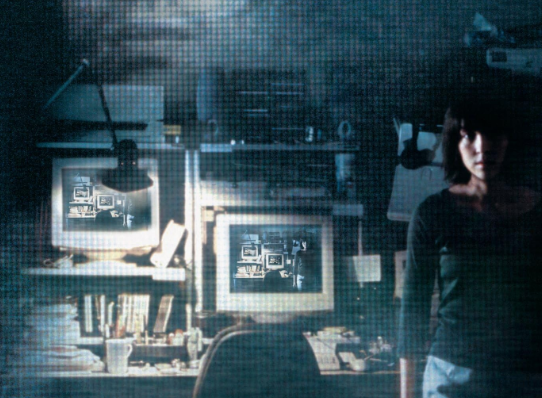
    Sleepwalkers (1992)

    0

    End-of-year reviews: Forgotten, underperformed, overshadowed, and/or under-the-radar films over the decades – Part 6

    A mother and son hiding a dark supernatural secret unleash horror in a small town where cats are the only creatures that can stop them.

    Very much flawed, deeply uneven, and yet oddly enjoyable. Escaping the coming-of-age theme (see previous reviews), Sleepwalkers is a film with more holes than Swiss cheese: over-the-top acting, wildly inconsistent pacing and rhythm, and narrative logic that collapses under even the gentlest scrutiny. And yet, it’s precisely the kind of film you forgive for all of it.

    Written by Stephen King and directed by Mick Garris, Sleepwalkers never pretends to be anything more than it is. It doesn’t take itself seriously – and neither should you. The premise is somewhere between outrageous and laughable: shape-shifting cat people who are lethally afraid of cats, who can make themselves (and objects) disappear, who casually change car brands mid-scene, and who engage in incest without the film ever fully processing how unhinged that idea actually is. The film throws absurdity at the screen with such commitment that resistance feels pointless.

    There is a very specific charm to how Sleepwalkers operates. Despite being released in the early ’90s, it feels firmly stuck in the ’80s – a time when B-movies thrived on illogical plotting, inexplicably unstoppable villains, and rules that changed whenever the story needed them to – the villain never runs, yet always stays ahead of the victim (rings a bell?).

    Sleepwalkers doesn’t aim to scare; it aims to entertain. Its pleasures lie in excess, and in watching a film fully commit to its own nonsense – oh, and how amazing Mädchen Amick and Alice Krige look. The performances are broad, the mythology is gloriously unstable, and the rules of the world are rewritten on the fly. There’s fun in spotting how little the film cares about plausibility – as long as it keeps moving.

    This is safe, harmless escapism. Not horror that unsettles, but horror that amuses. A relic of a time when genre cinema could be unapologetically silly, shamelessly indulgent, and completely unconcerned with coherence. Sleepwalkers may not be good by conventional standards – but it is entertaining, and sometimes, especially at the end of the year, that’s more than enough.

    Thanks for reading and Happy New Year, everyone!

    Please, don’t forget to share. If you enjoy my work and dedication to film, please feel free to support me on https://www.patreon.com/kaygazpro. Any contribution is much appreciated and valued.

    Solidarity for all the innocent lives that suffer the atrocities of war!

    Stay safe!
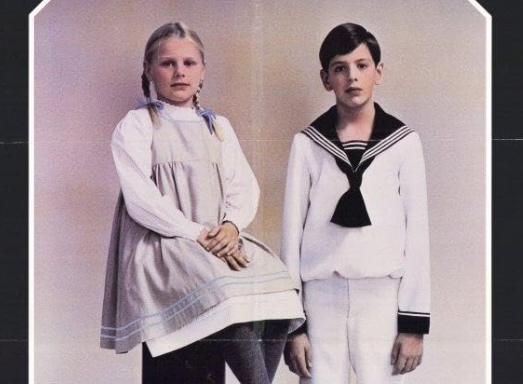
    The Fundamentals of Caring (2016)

    0

    End-of-year reviews: Forgotten, underperformed, overshadowed, and/or under-the-radar films over the decades – Part 5

    A grieving writer and a cynical teenager embark on an unexpected road trip that changes their lives forever.

    Bittersweet, honest, and genuinely human. Following up on his performance in Submarine (2010): https://kaygazpro.com/submarine-2010/, Craig Roberts once again proves his strength in playing cynicism in one of Netflix’s most effective bittersweet comedies. Pairing Roberts with Paul Rudd is already a winning combination, and the film smartly builds its emotional core around that chemistry. Jennifer Ehle, Selena Gomez, and Julia Denton enhance that journey, making it bolder and braver.

    Based on the novel by Jonathan Evison, writer/director Rob Burnett brings to life a road movie that understands the quiet complexities of human connection. A road that surfaces faith and belief, disappointment and fulfilment, and emotional implosion and honesty. It explores life’s truths without sermonising, allowing its characters – and the audience – to arrive at meaning organically.

    Roberts leans once more into his trademark cynicism, but beneath it lies vulnerability, frustration, and a longing to be seen. You feel for him not because the film asks you to, but because his emotional logic is painfully recognisable: It’s a disabled kid trying to understand why his father abandoned him. Paul Rudd, meanwhile, does what he does best: delivering deadpan comedy while grounding the film with genuine dramatic weight. His performance is restrained, compassionate, and quietly devastating when it needs to be.

    Structurally, The Fundamentals of Caring is a classic hero’s journey disguised as a low-key indie road trip. It has a satisfying beginning, middle, and end – something increasingly rare in films that aim for emotional realism. The lessons it offers are never forced; they emerge naturally through humour, discomfort, and moments that occasionally catch you off guard, cutting your breath short just as easily as they make you laugh.

    Ultimately, this is a film about caring – not just for others, but for life itself, even when it disappoints you.

    And now, onwards to the last review of the year (following review)! Deliberately saved it for the end…

    Thanks for reading!

    Please, don’t forget to share. If you enjoy my work and dedication to film, please feel free to support me on https://www.patreon.com/kaygazpro. Any contribution is much appreciated and valued.

    Solidarity for all the innocent lives that suffer the atrocities of war!

    Stay safe!
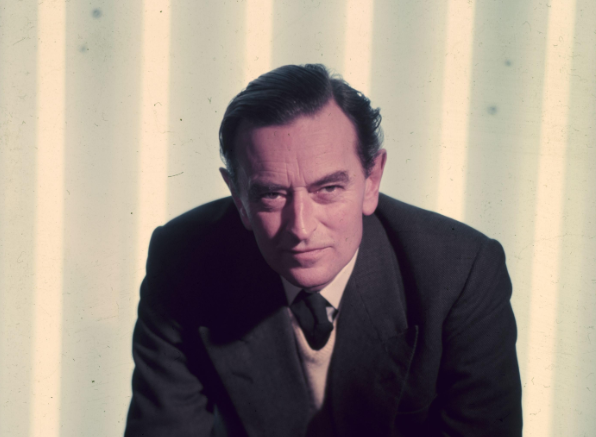
    Submarine (2010)

    End-of-year reviews: Forgotten, underperformed, overshadowed, and/or under-the-radar films over the decades – Part 4

    A socially awkward teenager navigates first love, family dysfunction, and the existential burdens of adolescence.

    A British coming-of-age of existential wit. Following up on Stand by Me (1986): https://kaygazpro.com/stand-by-me-1986/ and staying focused on the subgenre, Submarine is a distinctly British entry into the modern coming-of-age canon, akin to films like Comet (2014): https://kaygazpro.com/comet-2014-comedy-drama-romace/, Me and Earl and the Dying Girl (2015): https://kaygazpro.com/me-and-earl-and-the-dying-girl-2015-comedy-drama-romance/, 500 Days of Summer (2009): https://kaygazpro.com/500-days-of-summer-2009-comedy-drama-romance/, and It’s Kind of a Funny Story (2010): https://kaygazpro.com/its-kind-of-a-funny-story-2010-comedy-drama-romance/ – End-of-year reviews from a previous year.

    Esoteric and existential, the film navigates the weight of childhood insecurities, traumas, and the perplexing gulf between adults who have long forgotten – or never truly lived – what growing up feels like, and children who struggle to understand the rules, compromises, and disappointments of the adult world. This disconnect drives much of the film’s humour, melancholy, and most inner thoughts.

    Co-writer/director Richard Ayoade crafts a meticulously composed world, with a cold colour palette, and editing that reflect Oliver’s (Craig Roberts) interior life: introspective, awkward, and slightly surreal. Ayoade captures his reactions, framing both isolation and discovery with a subtle irony that complements the dry, cynical, witty script.

    Craig Roberts, Yasmin Paige, Noah Taylor, Sally Hawkins, and Paddy Considine deliver remarkable performances, bringing to life the complex, awkward, and sometimes painfully honest interactions that define Oliver’s world. Each character embodies the reciprocity of miscommunication between generations: children grappling with misunderstandings and adults who fail to meet them halfway. Ben Stiller’s influence as a producer is subtle but effective, guiding the film’s balance of melancholy and humour while allowing Ayoade’s singular vision to shine. A rare film that understands both the burdens of childhood and the compromises of adulthood.

    Thanks for reading!

    Please, don’t forget to share. If you enjoy my work and dedication to film, please feel free to support me on https://www.patreon.com/kaygazpro. Any contribution is much appreciated and valued.

    Solidarity for all the innocent lives that suffer the atrocities of war!

    Stay safe!
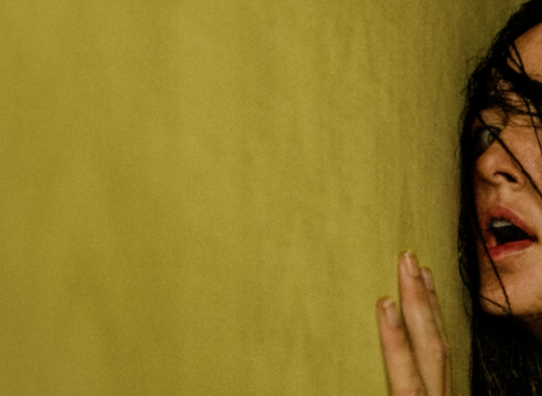
    Stand by Me (1986)

    End-of-year reviews: Forgotten, underperformed, overshadowed, and/or under-the-radar films over the decades – Part 3

    Four boys embark on a life-changing journey to find a dead body in the 1950s, discovering friendship, courage, and childhood bittersweet lessons.

    The timeless coming-of-age masterpiece. Following up on Moonrise Kingdom (2012): https://kaygazpro.com/moonrise-kingdom-2012/ Stand by Me is the absolute classic of coming-of-age cinema, a film that endures because it captures the very essence of growing up – the joy, excitement, fear, and uncertainty of leaving childhood behind and stepping into the world. Based on Stephen King’s novella The Body, it stands as one of the author’s finest adaptations, translating the subtleties of adolescence into a cinematic language both intimate and universal.

    At its heart, Stand by Me is about friendship, courage, and the bittersweet nature of memory. Director Rob Reiner crafts a film that is at once nostalgic and authentic, blending warmth with melancholy. Pay attention to the small gestures – the hesitant glance, the shared laugh, the worried frown – they create an intimacy that draws the audience directly into the world of four boys on a journey to witness a dead body. Cinematographer Thomas Del Ruth complements this with steady compositions and naturalistic lighting that imbue the Pacific Northwest setting with both beauty and foreboding. The framing of the boys against vast landscapes indicates how small we feel in the world as children, yet how enormous our experiences seem or can be.

    As for the film’s rhythm? Chris’s quiet internal struggles, Gordie’s literary-voiced reflections, Teddy’s anger and loyalty, and Vern’s comic relief are balanced against moments of tension and suspense throughout the journey. The editing allows both the subtle and the dramatic beats to breathe, giving the audience time to connect emotionally while maintaining narrative momentum.

    The A-list cast – Wil Wheaton, River Phoenix, Corey Feldman, and Jerry O’Connell – achieve a level of chemistry rare among child actors. Their performances feel lived-in and genuine, capturing the unspoken bonds and occasional conflicts that define friendship. Every viewer who remembers what it was like to roam, explore, and dare before the age of phones and the internet will find themselves relating to these characters, laughing with them, worrying with them, and ultimately feeling their triumphs and heartbreaks as their own.

    As I often like to say, Stand by Me is a mirror for anyone who has grown up. It takes us back to the transition from childhood to adolescence, which is messy, exhilarating, and profoundly emotional. It is a celebration of friendship, courage, and the fleeting, yet indelible, magic of youth – a timeless coming-of-age masterpiece that will continue to resonate across generations.

    The evolution of cinema, though, found more ways to explore the inner troubles of youth, something that leads me to my next review…

    Thanks for reading!
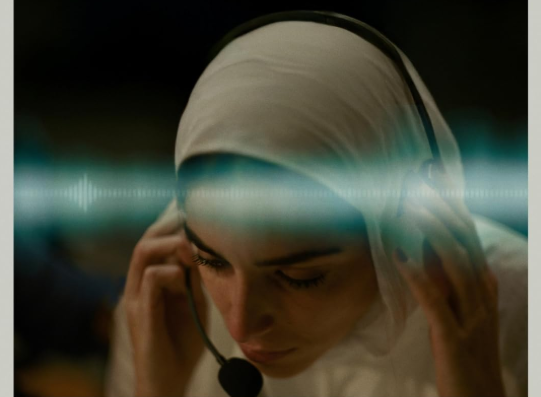
    Please, don’t forget to share. If you enjoy my work and dedication to film, please feel free to support me on https://www.patreon.com/kaygazpro. Any contribution is much appreciated and valued.

    Solidarity for all the innocent lives that suffer the atrocities of war!

    Stay safe!